Stopping an inspection can be the safest way to calm aggressive bees. Knowing how to calm aggressive bees during inspection starts with gentle handling, but if the colony becomes increasingly defensive, close the hive safely and walk away rather than forcing the job to continue.
It’s understandable to want to finish a check once the hive is open. But bees darting around your head, striking your veil or stinging your gloves are clear signs to pause and reassess. Move slowly, avoid crushing bees, and don’t use smoke as a reason to press on if the colony is becoming more agitated.
This guide explains practical ways to reduce disturbance: handle tools carefully, choose suitable weather, respond appropriately to a sting, and recognise when to close the hive or end the inspection. You’ll also learn how to leave the colony secure and decide when it’s sensible to return.
Key Takeaways
- Use tools gently and keep frame handling calm to avoid crushing bees and adding to colony defensiveness.
- Choose a suitable inspection day and time; poor weather or a recent change in forage can affect how bees behave.
- Learn the warning signs that mean it’s safer to close the hive and leave the inspection unfinished.
- If you’re stung, step away calmly and consider how the sting may affect the colony’s response.
- Separate a one-off difficult inspection from a recurring pattern before deciding what to do next.
1. Using tools to move bees gently and avoid crushing them
Honey bees may become defensive when an inspection disturbs the colony or bees are crushed. A food dearth, poor weather, reduced forage or queenlessness can also affect behaviour, so consider the colony’s conditions as well as your handling.
Move the hive tool and frames slowly, without jerks, knocks or banging equipment against the hive. Crushed bees can release alarm pheromone, which may prompt other bees to respond defensively. Gentle handling helps prevent crushing and keeps vibrations to a minimum.
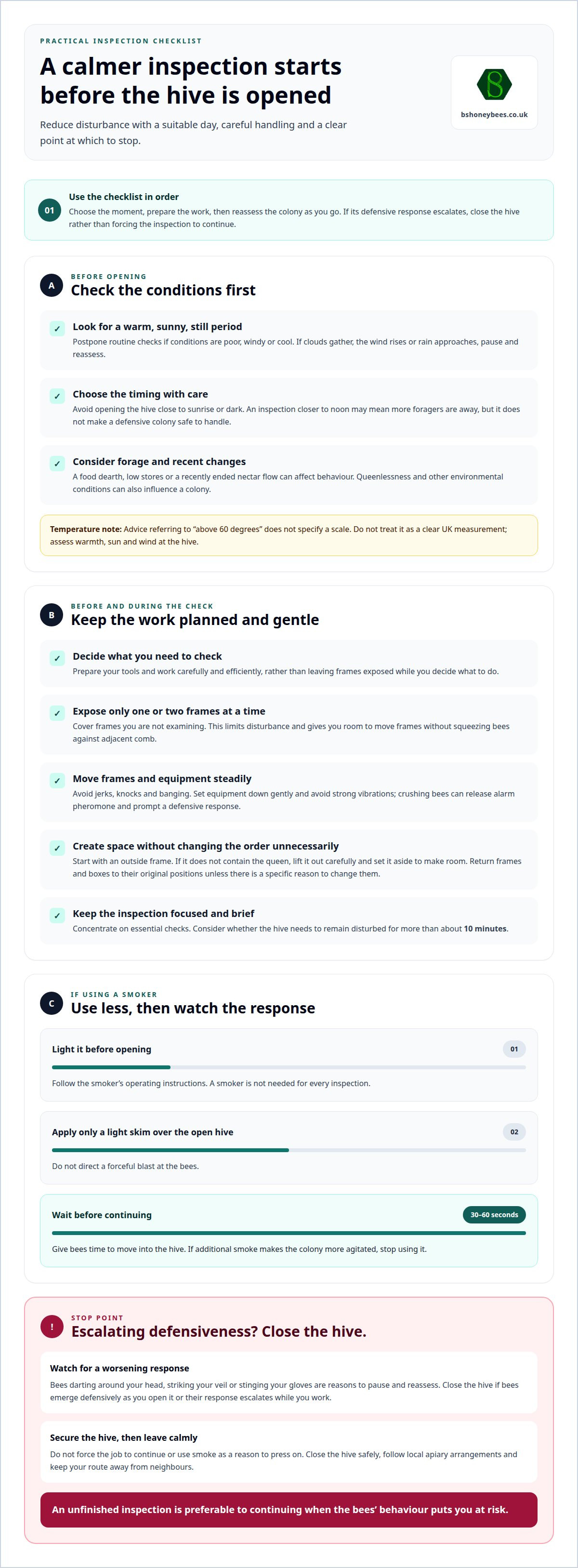
Plan the inspection before opening the hive. Decide what you need to check, then work carefully and efficiently instead of leaving frames exposed while you think. Cover frames you aren’t examining, exposing only one or two at a time. This limits disturbance and gives you room to move each frame without squeezing bees against adjacent comb.
Start with an outside frame. If it doesn’t contain the queen, lift it out carefully and set it aside to create space for moving the remaining frames. Return frames and boxes to their original positions unless there’s a specific reason to change them. Keeping a consistent order reduces unnecessary handling.
A smoker isn’t needed for every hive inspection. If you use one, light it before opening the hive and follow its operating instructions. Apply only a light skim of smoke over the top of the open hive, never a forceful blast directly at bees. Wait 30-60 seconds for bees to move into the hive before continuing. Some colonies become more agitated with additional smoke, so stop using it if their behaviour worsens.
To inspect a defensive colony calmly and quickly, prepare your tools, expose one or two frames, move them gently, and focus on essential checks. Keep the inspection brief; consider whether the hive needs to remain disturbed for more than about 10 minutes. If the colony’s defensive response escalates, prioritise closing the hive over completing every check.
During a dearth, low food stores can make bees more irritable. Avoid opening the hive for routine checks without a clear need. When an inspection is necessary, handle frames gently and take care not to crush bees. These steps help reduce disturbance, but can’t eliminate every cause of defensive behaviour.
A controlled pace balances care with confidence. Move deliberately, but don’t let the inspection drag on unnecessarily. Calm movements give you time to handle the hive carefully, while a purposeful approach limits the time spent working among the bees. Avoid sudden turns or hurried frame movements; steady handling is better than trying to make up time through haste.
Pay attention to the sounds and vibrations your actions create. Set equipment down gently and avoid striking it against the hive or nearby surfaces, since strong vibrations can agitate bees. Keep your movements measured, including when repositioning tools. Use only as much smoke as needed, and avoid crushing bees as you work. Gentle handling, minimal smoke and a confident, careful pace can help reduce defensive behaviour without adding unnecessary disturbance.
2. Choosing suitable weather for an inspection
Before inspecting a defensive colony, check the forecast and assess conditions at the apiary. Choose a sunny, warm, still period; postpone the inspection if it’s poor, windy or cool. Consider whether a strong nectar flow has recently stopped, as this change can affect the colony’s temperament.
Timing matters as much as the forecast. Avoid opening the hive close to sunrise or dark, when more foragers are likely to be at home. An inspection closer to noon may mean more foragers are away. That can reduce the number of bees present, but it doesn’t make a defensive colony safe to handle.
Let the season guide your judgement. A cool, windy spring day is a poor choice because bees may be less settled when the hive is opened. In summer, look for a warm, still, sunny day. If clouds gather, the wind rises or rain approaches, pause and reassess rather than opening the hive simply because you planned to inspect.
Temperature advice sometimes gives a threshold of above 60 degrees on a sunny day. Treat that figure cautiously in a United Kingdom context: the figure does not identify a temperature scale, so it cannot be used as a clear local measurement. Consider the actual conditions at the hive, including warmth, sun and wind, rather than relying on that number alone.
Forage also affects the decision. Bees may become more irritable during a food dearth, when stores are low. A strong nectar flow that has recently stopped can mark a change in food availability. Before opening the hive, consider what forage is currently available and whether the colony may be under pressure. Seasonal forage is also central to the nectar behind English honey.
Make a practical go-or-wait decision before taking out your tools. If the day is bright and still, the temperature is suitable and the colony’s condition supports an inspection, prepare for a focused visit. If the weather turns poor or a recent flow has ended, postpone routine checks where possible. Choose a better window instead of adding weather-related disturbance to an already defensive colony.
Weather won’t explain every change in behaviour. Forage, queenlessness and other environmental conditions can also influence a colony. Consider these factors alongside the forecast, and compare the day’s conditions with the colony’s recent behaviour. That context helps you decide whether an inspection is necessary now or better left for a calmer, more suitable period.
3. Closing the hive and walking away if bees become aggressive
When a colony becomes defensive, secure the hive before leaving it exposed. Follow any local apiary arrangements, keep your route away from neighbours, and don’t continue an inspection once the bees’ behaviour puts you at risk.
Close the hive if bees emerge defensively as you open it or their response escalates while you work. Replace exposed frames and boxes carefully, then put the hive back as you found it. If the bees are unusually defensive, leave the remaining checks for another day rather than forcing the inspection to continue.
If a sting penetrates your suit, step away and deal with it first. Return only if you can safely finish closing the hive. Walk away steadily, choosing a route that avoids nearby neighbours. Don’t leave an exposed colony open while moving to a safer position.
Aggression alone doesn’t establish that a colony is queenless or that its queen is poorly mated. Consider whether the change was a one-off, followed a particular action, or forms a consistent pattern. Check queen status during a later, suitable inspection. If the colony is queenless or its condition suggests a queen problem, address that finding rather than assuming temperament alone explains it.
Consider requeening after three weeks of poor temper, particularly when other colonies in the apiary are behaving well. A regularly defensive colony may be a candidate for a new queen. After replacement, allow 6-9 weeks for brood and workers originating from the old queen to be replaced; behaviour may take time to change. If a replacement queen is unavailable, uniting the colony with a strong, well-behaved colony is another option.
There’s no single UK cost figure to give for requeening from these facts. The expense depends on the replacement queen and any additional inputs needed for the colony; avoid treating a queen’s price as the full cost of the management decision.
Wear a well-fitting bee suit, veil and gloves when working with a defensive colony. You can wear a long-sleeved, light-coloured cotton shirt beneath your protective clothing. Keep a smoker available, but use it only when needed; apply light smoke rather than blasting the bees. If smoke makes the colony more agitated, stop using it.
For local management, prioritise securing the hive, protecting people nearby and recording what happened. Note the weather, forage conditions and any handling incident, then compare them with the colony’s behaviour at its next inspection. These notes can help distinguish a temporary disturbance from a recurring temperament problem.
Follow local apiary arrangements, secure the hive before leaving, and choose a route away from neighbours. Prioritise protecting people nearby and record the weather, forage conditions and any handling incident alongside the colony’s behaviour.
4. Responding to a sting and alarm pheromones
A sting changes the inspection. Honey bees can respond to sting pheromone, a chemical signal that may trigger further defensive behaviour. Put down your tools and walk slowly away from the hive. Don’t keep handling frames while bees are reacting to the scent around the sting site.
Keep your movements measured as you leave. Avoid swatting, running or turning suddenly, which can add disturbance around the colony. If bees are still following, keep moving away instead of stopping beside the hive. Choose a route clear of other people and give yourself room to deal with the sting outside the bees’ flight path.
End the inspection if bees dart around your head, strike your veil or sting your gloves. These are practical warning signs, not a cue to finish one more frame. If the hive is open, return only if you can safely close it. If you’ve been stung through your suit, step away and deal with the sting before returning to secure the colony.
Crushed bees can release alarm pheromone, adding another signal to an already unsettled hive. Avoid squeezing bees between frames, under the crownboard or against the hive tool. If you accidentally crush bees, a little smoke may help reduce the spread of alarm pheromone. Use it sparingly. Some colonies become more agitated with additional smoke, so stop if their response worsens.
Your breathing matters near the open hive. Honey bees can react defensively to carbon dioxide, so avoid heavy sighs or forceful exhales over exposed frames. Take a deep breath, then exhale slowly away from the bees. For example, turn your face aside before breathing out instead of directing your breath into the hive.
After leaving the apiary, note what happened while the details are fresh. Record whether the trigger was a sting, crushed bees, a frame movement or a change in the colony’s behaviour. Also note conditions such as available forage and food stores, since low stores during a dearth can contribute to irritability. Compare your notes with the next inspection to see whether the response was isolated or recurring.
Don’t use smoke to override an escalating response. If bees continue striking your veil or stinging your gloves, stop the inspection and move away. A calm exit protects you and avoids adding disturbance to a colony already responding to alarm cues.
5. Aborting an inspection when bees are unusually aggressive
An inspection is a task, not a deadline. If bees suddenly change temperament, stop moving and hold still briefly. If they don’t settle, back away slowly. Knowing how to calm aggressive bees during inspection also means recognising when to stop: repeated strikes against your veil, stings through your gloves or bees following you are reasons to end the visit, not uncover another frame.
Decide what needs to happen before leaving. If the hive is open, close it carefully when you can do so safely, then move away from the apiary. Don’t leave exposed frames or boxes behind. If a sting through your suit needs attention, step away first and return only when you can safely secure the hive.
After a difficult encounter, wait 2 or 3 days before inspecting again. That pause gives the colony time to settle and lets you choose a more suitable inspection window. Don’t return simply because the original task remains unfinished. Reassess the weather, forage and urgency of the check before opening the hive again.
Use your next visit to distinguish an isolated incident from a pattern. Record what happened, including whether aggression began after a dropped tool, crushed bee, sudden weather change or sting. Compare the colony’s response with that of other colonies in the same apiary. If those colonies remain settled, the contrast may help identify a colony-specific issue.
One difficult inspection doesn’t prove that the queen is the cause. Consider environmental factors such as poor forage, low food stores, weather or queenlessness. If the colony repeatedly behaves defensively under suitable conditions, investigate its queen status and temperament during a planned inspection. Persistent aggression may call for a management change rather than repeated attempts to work through it.
Set a clear stop rule before opening the hive: close it if bees keep attacking your veil, stinging your gloves or following you away. If you’re deciding how to calm aggressive bees during inspection, prioritise a safe exit over finishing every check. This protects you and avoids further disturbance.
For recurring defensive behaviour, a replacement queen may be part of the longer-term plan. Consider suitable queen stock only after assessing the colony and the pattern you’ve recorded. Explore queen options as a next step when requeening is appropriate, rather than reopening a hive that is still unusually defensive.
When bees change temperament, hold still briefly; if they don’t settle, back away slowly. Treat this as a decision point, not a reason to press on. Keep your movements limited while you wait, and let the bees’ behaviour guide whether you stay or withdraw. If they haven’t calmed, prioritise distance over the unfinished task. Pause deliberately, then retreat slowly if calm doesn’t return. Don’t let the wish to complete the inspection override that choice. Return to the task only when the bees have settled and you can proceed safely.
BS Honey Bees
BS Honey Bees Ltd can support your next beekeeping decision with suitable colony and queen options. If a defensive temperament persists and requeening is appropriate, consider F1 Buckfast Queens or Carniolan Queens. For establishing or expanding an apiary, 5 / 6 Frame Nucs and 2 in 1 Poly Nucs offer further options.
Use your inspection notes to guide your decision. Consider whether the behaviour was repeated, whether other colonies were settled, and whether queen replacement or a new colony better suits your plans. These products don’t replace careful assessment or safe hive management, but they can support your next step once you’ve decided what your apiary needs.
Contact BS Honey Bees Ltd to discuss your beekeeping requirements.
Make your next inspection a considered one
A difficult inspection can provide useful information for your next decision. Keep a clear record of what changed, what was happening around the hive and how the colony responded. Use those observations to decide whether to adjust your approach, postpone a check or consider longer-term colony management.
Knowing how to calm aggressive bees during inspection also means recognising when continuing is the wrong choice. Put the safety of people and the colony first, and base your next step on what you’ve observed, not pressure to finish every task at once.
If you’re considering suitable queen or colony options as part of your beekeeping plans, contact BS Honey Bees Ltd for help. A measured decision today can help you approach your next inspection with greater clarity and confidence.
Frequently Asked Questions
When should an inspection be stopped or postponed due to aggressive bee behaviour?
Stop if defensive behaviour continues after you pause, or if bees repeatedly target your veil or gloves. If you’re still outside the hive, don’t open it; if it’s already open, prioritise securing it when safe. For example, leave an optional brood check unfinished rather than prolonging a difficult visit. After a bad encounter, wait 2 or 3 days before returning, and use your notes to plan what needs attention next.
How can weather, time of day and nectar flow affect bee aggression during inspection?
Weather, forager activity and food availability can all influence a colony’s response. A sunny, still spell is generally more suitable than a cool, windy day, and inspecting nearer noon may mean more foragers are away. Don’t rely on the calendar alone to judge nectar flow. Compare current forage and the colony’s stores with recent conditions, especially after a strong flow stops, then decide whether a routine inspection can wait.