What if the most effective way to quieten a frantic mind was found inside a box of sixty thousand stinging insects? It sounds counterintuitive, yet for many across the country, the rhythmic hum of a hive is the ultimate antidote to the pressures of modern life. You likely recognise the toll that high stress and a lack of connection to nature take on your daily wellbeing. Finding a rewarding hobby that offers both structure and a sense of achievement can feel like an uphill struggle when you're already exhausted.
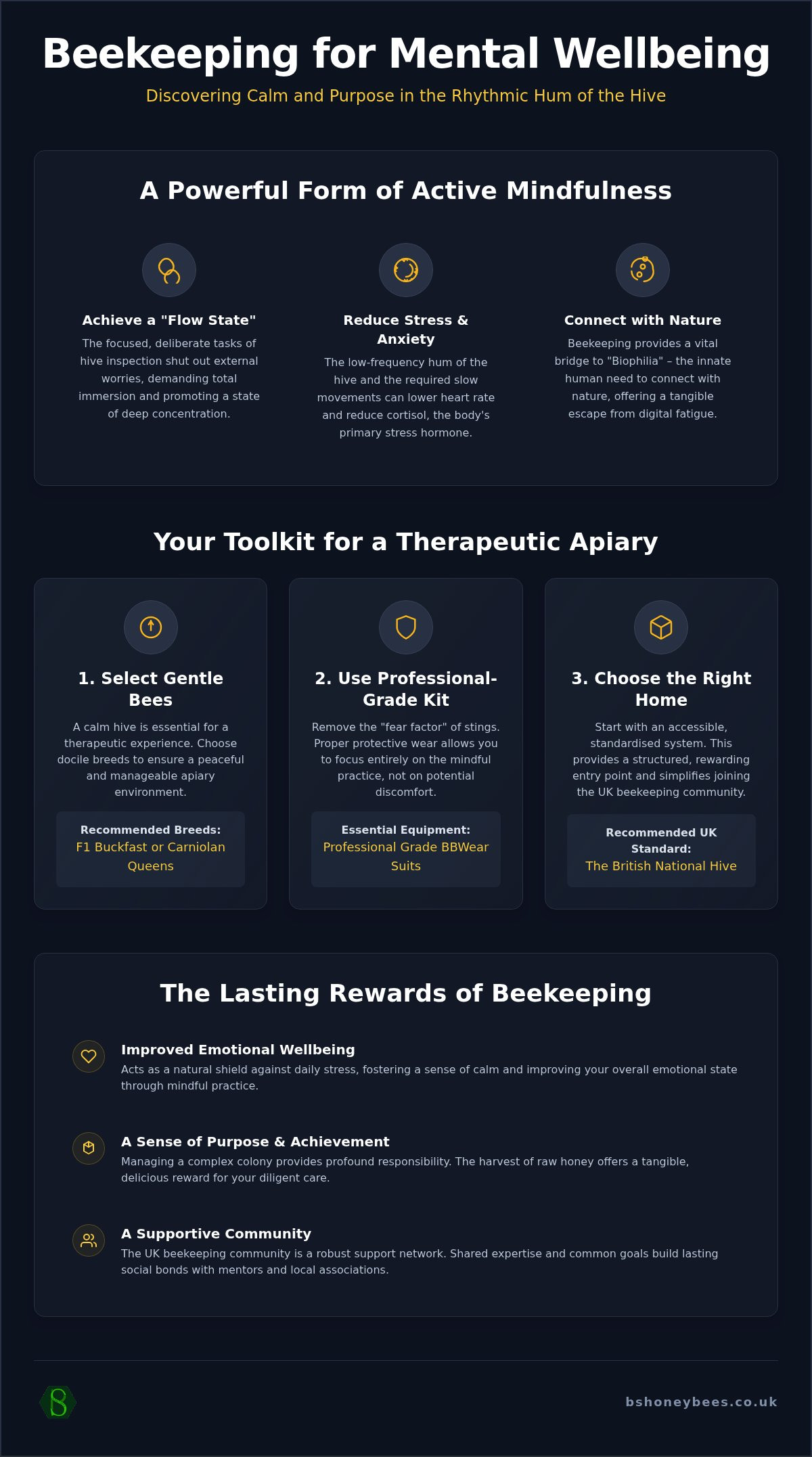
This article demonstrates how beekeeping for mental health uk acts as a powerful form of active mindfulness. You'll discover how the focused, deliberate movements required to manage a colony can significantly reduce anxiety and foster a profound sense of purpose. We will explore the therapeutic advantages of working with gentle temperament bees, the role of professional grade BBWear suits in removing the fear factor, and how the British National Hive provides a structured path to joining a supportive community. By the end, you'll understand why a calm hive leads directly to a calm beekeeper.
Key Takeaways
- Learn how the "flow state" achieved during hive inspections provides a natural shield against daily stress and improves emotional wellbeing.
- Discover how beekeeping for mental health uk serves as a bridge back to nature, satisfying the innate human need for a meaningful biophilic connection.
- Understand why selecting gentle bee breeds, such as F1 Buckfast or Carniolan queens, is essential for maintaining a calm and therapeutic apiary environment.
- Remove the "fear factor" of stings by using professional-grade BBWear suits, ensuring your focus remains entirely on the mindful practice of apiculture.
- Identify the British National Hive as the accessible UK standard that provides a structured and rewarding entry point into this therapeutic hobby.
The Therapeutic Power of the Hive: An Introduction
Therapeutic beekeeping is a structured, intentional interaction with honey bees designed to foster mental and emotional wellness. It moves beyond traditional livestock management by prioritising the keeper's psychological state alongside the colony's health. For many, beekeeping for mental health uk serves as a vital bridge to "Biophilia," which is the innate human instinct to seek connections with nature and other forms of life. In an increasingly urbanised society, the apiary provides a tangible point of contact with the natural world that many people lack.
This practice offers a unique sense of responsibility and purpose. When you manage a hive, you're the steward of a complex, thriving community that relies on your oversight. This duty can be transformative for those struggling with a lack of structure or a feeling of disconnection. The UK beekeeping community reinforces this. It acts as a robust support network where shared expertise and common goals build lasting social bonds. You're never truly alone in the craft; there's always a mentor or a local association ready to assist.
Why Beekeeping is Growing in Popularity for Wellbeing
The UK healthcare landscape is shifting toward green social prescribing. This approach recognises that outdoor, nature-based activities can be just as effective as traditional interventions for certain conditions. Beekeeping fits this model perfectly. The rhythmic, seasonal nature of hive inspections offers a necessary reprieve from digital fatigue and the constant pings of a smartphone. There's also a profound sense of achievement in the harvest. Producing your own raw honey UK provides a physical, delicious reward for months of diligent care and attention. It's a tangible success you can share with others.
The Biological Connection: Bees and Stress Reduction
Scientific interest in Apitherapy and the broader benefits of bee products highlights how deeply these insects impact human health. Standing amongst the hives, the low-frequency hum of thousands of wings has been shown to lower human heart rates and reduce cortisol levels. You cannot rush a hive inspection. Bees demand slow, deliberate movement. This requirement forces a state of physical calm that eventually permeates the mind. The sensory experience is immersive; the scent of warm wax and propolis grounds you in the present moment. The honey bee, Apis mellifera, acts as a living mirror for your emotional state; if you're agitated, the colony will reflect that energy back to you, teaching you to regulate your responses in real time.
Mindfulness in Motion: How Beekeeping Practices Improve Focus
Beekeeping is more than just a hobby; it's a physical anchor to the present moment. For those exploring beekeeping for mental health uk, the practice provides a unique form of active mindfulness. Unlike sitting meditation, which often feels passive or difficult during high-anxiety periods, beekeeping demands total immersion in a physical task. This creates a natural grounding effect that pulls you out of your head and into the immediate environment. When you're responsible for the welfare of a colony, your brain naturally prioritises the task at hand over internal stressors.
Achieving the "Flow State" During Hive Inspections
You can't rush a colony of honey bees. If you approach a hive with frantic energy or hurried movements, the bees will respond to that agitation. This forced deceleration is the first step toward a flow state. Inside the hive, every action requires absolute precision. You might be searching for a mated queen bee amongst tens of thousands of workers. This level of concentration shuts out external worries and forces the mind to "single-task," which is a rare luxury in our multi-tasking world.
The University of Reading research on beekeeping highlights how this sense of purpose and identity can combat symptoms of depression, specifically anhedonia. By focusing on a single, vital task, you allow the brain to reset and find clarity. This immersion isn't just about work; it's about the deep satisfaction of being entirely present. It's a disciplined form of focus that rewards the keeper with a quiet mind and a healthy colony.
Sensory Grounding in the Apiary
The apiary is a feast for the senses, providing immediate grounding during times of high stress. The scent of propolis and beeswax acts as a natural form of aromatherapy. It's an earthy, sweet aroma that signals to the brain that it's time to focus. The tactile experience is equally powerful. You feel the weight of the frames and the warmth radiating from the brood nest, which often sits at a steady 35 degrees Celsius. This physical connection to another living entity is incredibly grounding.
Observing the visual patterns of the comb is a form of externalised meditation. You watch the bees perform their waggle dances or tend to the larvae in hexagonal cells. This shifts your perspective from internal anxieties to the intricate behaviour of a collective. This shift is essential for beekeeping for mental health uk. It reminds the keeper of the broader cycles of life and the importance of each small contribution to the whole. If you're ready to begin this journey, choosing a high-quality British National Hive is the first step toward creating your own therapeutic space.
The seasonal beekeeping calendar also offers a vital long-term perspective. You aren't just looking at today's problems; you're planning for the spring forage or preparing the colony for the winter cluster. This forward-looking structure provides a sense of continuity and hope. It encourages you to look beyond the immediate moment and engage with the future in a positive, proactive way.
Selecting Gentle Bees for a Calmer Mind
The temperament of your colony is the single most important factor in determining the success of beekeeping for mental health uk. If you're constantly bracing for a sting or dealing with defensive behaviour, the therapeutic benefits of the hobby vanish instantly. Aggressive "mongrel" colonies create a high-stress environment that deters beginners and fuels anxiety. Conversely, a gentle colony allows you to focus entirely on the mindful aspects of hive management without the "fight or flight" response triggered by defensive bees.
The queen bee acts as the genetic blueprint for the entire hive. Her temperament dictates whether the workers are calm on the comb or prone to "following" and stinging. For a truly therapeutic experience, you must prioritise gentle genetics from the outset. A calm colony isn't an accident; it's the result of disciplined breeding standards.
Buckfast vs Carniolan: The Best Breeds for Calmness
Selecting the right strain of bee is a strategic decision for your wellbeing. Two breeds stand out for their docile nature: Buckfast and Carniolan. Sourcing F1 Buckfast queens UK ensures you're working with bees bred specifically for low aggression and ease of handling. Carniolan bees are equally praised, often described as "sitting still" on the frames during inspections. This allows for a much more relaxed experience where you can observe the colony without feeling rushed or threatened.
| Breed | Temperament | Ease of Management |
|---|---|---|
| F1 Buckfast | Highly Docile; low defensive behaviour. | Excellent; bred for steady, predictable handling. |
| Carniolan | Exceptionally Gentle; very calm on the comb. | High; ideal for beginners seeking a quiet hive. |
The Importance of Quality Breeding
Sourcing your bees from a specialist breeder is non-negotiable for therapeutic apiculture. Feral swarms or unmanaged "local" bees often carry unpredictable traits. Whilst some local bees are fine, many develop "second-generation" aggression as they cross-breed with defensive drones. This leads to colonies that require heavy smoking and aggressive management, which is the opposite of a mindful practice. It's much harder to find your "flow state" when the bees are bouncing off your veil.
Starting with high-quality honey bee nucs for sale UK provides a manageable entry point. A nucleus colony is a small, established family of bees with a proven queen. This allows you to build your confidence alongside the colony's growth. When you know your bees are gentle, you can approach the hive with a clear mind. This ensures that beekeeping for mental health uk remains a restorative, life-affirming pursuit rather than a source of additional stress.
Essential Kit and Preparation for Peace of Mind
Confidence in your equipment is the bedrock of a successful experience in beekeeping for mental health uk. You cannot achieve a flow state if you're constantly flinching or worrying about gaps in your clothing. Total protection removes the "fear factor" of stings, allowing your nervous system to remain calm during every interaction with the colony. When you trust your kit, your movements become more fluid and deliberate. This physical ease is essential for maintaining the mental clarity required for therapeutic apiculture.
Many beginners suffer from "veil anxiety," a psychological response where the mesh feels restrictive or claustrophobic. Overcoming this requires high-quality gear that offers superior visibility and airflow. If you can see clearly, you feel more connected to the bees and less like an observer behind a cage. Proper preparation also involves organising your smoker, hive tool, and records before you even open the hive. A chaotic workspace leads to a distracted mind; a tidy apiary promotes focus and reduces the frustration of lost tools.
Choosing the Right Protective Gear
Premium BBWear suits are the industry standard for a reason. They provide a robust barrier whilst remaining breathable during warm summer inspections. A clear, wide-angle view through the veil is vital to reduce feelings of isolation or panic. To ensure your safety and comfort, refer to our bee suit sizing guide UK. A secure, well-fitted suit means you don't have to worry about bees entering through loose cuffs, letting you stay grounded in the moment.
Setting Up a Stress-Free Apiary
Standardisation is your best friend when managing stress levels. The British National beehive is the UK standard, meaning parts are easily available and interchangeable. This reduces the frustration of mismatched frames or boxes during critical colony checks. Consider the height of your hive stands; an accessible working height prevents back strain and allows for more relaxed, steady observation of the brood nest.
For those looking to simplify their management, using 2-in-1 poly nucs is a highly efficient choice. These units offer excellent insulation, which leads to higher overwintering success and less anxiety for the keeper during the colder months. When your equipment works as it should, you're free to enjoy the rhythmic hum of the hive without distraction. If you're ready to equip your therapeutic apiary with professional-grade gear, browse our British National Hives and frames to get started.
Getting Started: Your Journey to Therapeutic Beekeeping
Starting your journey into beekeeping for mental health uk requires a blend of logistical precision and personal commitment. You cannot simply place a hive in a garden and expect immediate results; the therapeutic benefits come from the mastery of the craft and the routine of care. Proper preparation ensures that your first season is restorative rather than overwhelming. By following a structured path, you create the stable environment necessary for both your colony and your own peace of mind to flourish.
Timing is everything in the UK beekeeping calendar. The season is short and highly dependent on the weather, so your planning should ideally begin in the autumn or winter months. This lead time allows you to familiarise yourself with the biological needs of the honey bee before the physical work begins in the spring. Being proactive with your orders ensures you aren't left waiting when the forage begins to bloom.
A Step-by-Step Guide for the Aspiring Beekeeper
Success in therapeutic apiculture is built on a foundation of knowledge and high-quality equipment. Follow these steps to begin your practice:
- Step 1: Read and research. Understand the seasonal commitment required. Beekeeping is a long-term responsibility that demands regular inspections during the summer months. Recognising the lifecycle of the hive will help you feel more confident during your first year.
- Step 2: Secure high-quality equipment. Invest in a British National hive and a professional-grade BBWear suit. As established in previous sections, having gear you can trust is the primary way to eliminate anxiety in the apiary.
- Step 3: Order your bees early. To ensure a successful spring start, you should book your live bees well in advance. Demand for gentle F1 Buckfast and Carniolan colonies is high, and early ordering guarantees you a spot in the 2026 delivery schedule.
Building Your Support Network
Whilst beekeeping is a deeply personal form of mindfulness, you shouldn't practice it in isolation. Joining a local beekeeping association is one of the most effective ways to build a support network. These groups provide access to diverse people across the UK who share your passion. Meeting other keepers offers a sense of belonging and community that is vital for long-term mental wellbeing. It turns a solitary hobby into a shared environmental mission.
Finding a mentor is equally important. Having an experienced keeper guide your first few inspections reduces the "fear factor" and helps you interpret the behaviour of your colony. This guidance allows you to focus on the sensory and grounding aspects of the work. Over time, you'll transition from a learner to a steward of the environment. This shift in identity provides a lasting sense of purpose, as you contribute directly to the health of your local ecosystem whilst maintaining your own mental clarity through beekeeping for mental health uk.
Cultivating Clarity in the Apiary
The transition from a high-pressure lifestyle to the rhythmic hum of a hive offers a unique path to emotional resilience. Success in beekeeping for mental health uk depends on the foundation you build. Prioritising gentle genetics and utilising professional-grade BBWear suits removes the psychological barriers of fear. When you trust your equipment and the temperament of your colony, you're free to experience the deep, restorative focus of the flow state.
BS Honey Bees Ltd provides the specialist tools required for your therapeutic journey. We focus on calm-tempered F1 Buckfast Queens and Carniolan Queens to ensure your apiary remains a place of peace. As official BBWear stockists, we supply the protection needed for total confidence. We also offer UK-wide delivery of live nucleus colonies and British National Hives to get you started quickly and safely.
Browse our range of gentle Buckfast and Carniolan bees to start your journey and discover the profound sense of achievement that comes with being a steward of nature. It's time to find your quiet centre amongst the bees.
Frequently Asked Questions
Is beekeeping good for anxiety?
Beekeeping is highly effective for managing anxiety because it requires total immersion in a physical, outdoor task. When you engage with a hive, the requirement for slow, deliberate movements acts as a natural grounding technique. This shifts your focus away from internal stressors and onto the immediate environment. The rhythmic hum of the colony has been shown to lower heart rates, providing a sensory anchor that helps quieten a frantic mind.
Can I keep bees if I am afraid of being stung?
You can certainly manage bees even with a fear of stings by prioritising high-quality protection and gentle genetics. Using professional-grade BBWear suits removes the fear factor by providing a secure, sting-proof barrier. When combined with docile F1 Buckfast or Carniolan queens, the risk of aggression is minimal. This allows you to build confidence at your own pace, eventually replacing veil anxiety with a sense of calm and control during inspections.
How much time does beekeeping take each week?
During the active season from April to August, a single hive typically requires between 30 and 60 minutes of your time each week for a thorough inspection. This structured routine is part of why beekeeping for mental health uk is so effective; it provides a consistent, rewarding reason to spend time outdoors. Outside of the summer months, the time commitment drops significantly, as bees require very little intervention during the autumn and winter.
What are the best bees for a calm beekeeping experience?
The best bees for a calm experience are those bred specifically for a docile temperament, such as F1 Buckfast or Carniolan queens. These breeds are known for being exceptionally steady on the comb, which means they don't fly up or run when the hive is opened. Selecting these gentle strains ensures your apiary remains a therapeutic space rather than a source of stress, allowing you to focus entirely on observation and mindfulness.
Do I need a lot of space for a therapeutic hive in the UK?
You don't need a sprawling estate to keep a therapeutic hive; a standard-sized British garden or a secure corner of an allotment is often sufficient. The key requirement is a clear flight path for the bees and enough room for you to stand comfortably behind the hive during inspections. Using a British National hive ensures you have a compact, manageable set-up that fits easily into most residential outdoor spaces without overwhelming the area.
Is beekeeping an expensive hobby for mental health?
Beekeeping involves an initial investment in equipment and live bees, but it remains accessible compared to many other structured hobbies. The set-up requires a British National hive, a nucleus colony, and a quality protective suit. Once these foundational elements are in place, the ongoing annual costs are relatively low. Many keepers find that the long-term benefits to their mental wellbeing far outweigh the initial start-up expenditure required to begin the hobby.
Can beekeeping help with depression?
Beekeeping can be a powerful tool in managing depression by providing a strong sense of purpose and a connection to a wider community. Taking responsibility for the survival of a colony offers a meaningful reason to engage with the world, which can help combat feelings of lethargy or lack of identity. Research from sources like the University of Reading suggests that the structured nature of apiculture helps participants find new meaning and a sense of achievement.
What is the best time of year to start beekeeping for my wellbeing?
The best time to physically start your apiary is in early spring, typically April or May, when the weather warms and forage becomes available. However, you should begin your research and order your equipment and bees during the winter months. This preparation phase is a vital part of beekeeping for mental health uk, as it provides a positive focus and a sense of anticipation during the shorter, darker days of the year.