The difference between a thriving apiary and a stinging disappointment often comes down to a single decision made months before the first honey flow. If you are buying bees for the first time, the sheer volume of choices regarding genetics and delivery methods can feel overwhelming. You want a gentle colony that works hard, but the fear of importing disease or receiving an aggressive nucleus can stall your progress. It's a valid concern. Your success depends entirely on the quality of your foundation.
This guide cuts through the noise to provide a clear, professional roadmap for the 2026 season. You'll learn how to distinguish between F1 Buckfast and Carniolan queens, why a nucleus colony beats a package for beginners, and how to manage the logistics of live bee arrival. We've organised the essentials to give you total confidence in your supplier choice and your own ability. Expect a straightforward look at sourcing healthy stock and preparing your British National hives for a productive first year. We move from the technical details of breed selection to the practical steps of hiving your first colony with logistical precision.
Key Takeaways
- Standardise your apiary with British National hives before arrival to ensure seamless equipment compatibility for your new colony.
- Learn why a nucleus colony is the safest choice when buying bees for the first time, providing an established social structure that packages lack.
- Compare F1 Buckfast and Carniolan genetics to choose a breed that balances high honey productivity with a gentle temperament.
- Determine the best timing for your 2026 order by understanding the strategic differences between overwintered and spring nucleus colonies.
- Follow a professional protocol for receiving and hiving your bees to ensure they settle quickly and begin foraging immediately.
Preparation: What You Need Before Buying Bees for the First Time
Success in beekeeping starts months before your bees arrive. Preparation isn't just about clearing a space; it's about building a professional infrastructure that supports a healthy colony. Secure your apiary site now. It needs to be level, accessible, and sheltered from prevailing winds. Ensure the hive entrance faces south or south-east to catch the morning sun. In England and Wales, you must register on BeeBase. This free service from Defra is essential for monitoring bee health across the country and receiving alerts about local disease outbreaks. Talk to your neighbours early. Explaining the gentle nature of breeds like Buckfast bees often alleviates their concerns before the colony is even on-site.
Choosing Your Hive: Why the British National Hive is the Standard
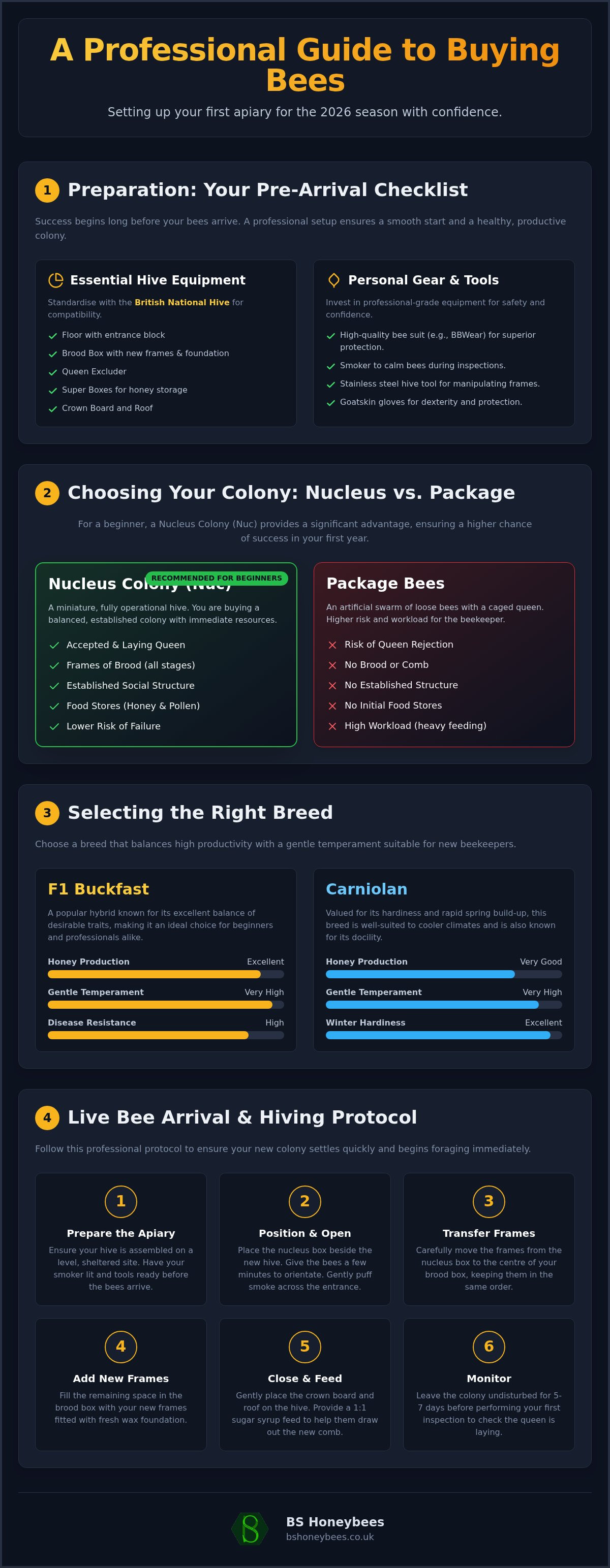
Standardisation is your best friend when buying bees for the first time. The British National hive is the most popular choice in the UK for good reason. Most nucleus colonies, including our 5 and 6 frame nucs, are designed specifically to fit this format. When researching what is a beehive, you'll notice many variations like the Langstroth or Commercial, but sticking to the National standard ensures you can easily source replacement frames, floors, and crown boards. A standard kit includes a floor, brood box, queen excluder, super boxes for honey storage, a crown board, and a roof. Always start with brand new frames and fresh wax foundation. This prevents the accidental introduction of diseases and provides the bees with a sterile environment to begin their work.
Protective Apparel: Investing in Confidence
Beginner anxiety is natural, but high-quality gear eliminates the fear of stings. Don't settle for budget, single-layer suits that often fail at the seams or wrists. Professional BBWear bee suits offer superior protection with robust zippers and high-visibility veils. This level of security allows you to work calmly and methodically, which in turn keeps the bees relaxed. Beyond the suit, your toolkit requires several essential items to manage your colony effectively:
- Smoker: Used to calm the bees by masking alarm pheromones.
- Hive Tool: A stainless steel pry bar for separating frames and boxes.
- Goatskin Gloves: These provide the best balance of protection and dexterity.
The smoker is your most important management tool. It encourages the bees to gorge on honey, making them significantly more docile during inspections. When you feel secure, you'll make better decisions and truly enjoy the learning process. Investing in professional-grade equipment from the start means you can focus on the bees rather than your own safety.
Nucleus Colonies vs Packages: Which is Best for Beginners?
When buying bees for the first time, you'll encounter two primary options: nucleus colonies (nucs) and package bees. A nucleus colony is essentially a miniature hive in full operation. It contains a mated queen, workers, drones, and several frames of brood at all stages of development. In contrast, a package is just a box of loose bees with a caged queen. For a novice, the choice is clear. A nuc provides an established social structure that significantly reduces the risk of failure during your first season.
The Biological Advantage of a Nucleus Colony
A nuc is a balanced ecosystem. Because it includes frames of honey and pollen, the colony has immediate resources to sustain itself whilst it expands into a full-sized hive. You aren't just buying bees; you're buying time. The presence of brood ensures a continuous cycle of new workers emerging, which prevents the population dip common in package bees. Most importantly, the queen is already accepted and laying. This eliminates the anxiety of queen rejection, a frequent issue when introducing a caged queen to a package. Observing the internal workings of 5 / 6 frame nucs allows you to see natural colony behaviour from day one.
Packages and Swarms: Avoiding the Beginner Pitfalls
Package bees are essentially an artificial swarm. They arrive with no comb, no food, and no brood. This puts an immense workload on the beekeeper. You must feed them heavily and hope they draw out wax foundation quickly enough for the queen to begin laying. It's a race against time that often ends in frustration for those new to the craft. Similarly, whilst "free" swarms might seem tempting, they come with significant risks. You have no way of knowing the health of the colony or the temperament of the bees. An aggressive or diseased swarm can ruin your experience before it truly begins.
Whilst the initial price of a nucleus colony is higher than a package, the value lies in the success rate. A nuc is far more likely to survive its first winter and can even produce a honey crop in its first year if conditions are right. Investing in quality stock ensures your apiary gets the best possible start. If you're ready to begin your journey, you can view our available nucleus colonies to secure your 2026 delivery.
Selecting the Right Breed: Buckfast vs Carniolan Bees
Genetics dictate every aspect of your beekeeping experience. When buying bees for the first time, temperament is the single most important factor to consider. You need a colony that remains calm on the frames during inspections, allowing you to identify the queen and check for disease without the distraction of defensive behaviour. Most UK beginners choose between F1 Buckfast and Carniolan genetics because both breeds have been meticulously refined for docility and productivity. High-quality genetics ensure your first season is spent learning the craft rather than managing aggression.
F1 Buckfast Queens: Docility and Low Swarming
The Buckfast bee is a legendary hybrid developed specifically for the UK climate. These bees are the gold standard for honey production and ease of handling. They're exceptionally gentle, often described as "sitting" on the comb whilst the beekeeper works. This calm nature makes them ideal for novices who are still perfecting their hive movements. Because F1 Buckfast queens are highly prolific, they create massive populations that can secure impressive honey crops. However, this productivity requires diligent management. You must ensure they have enough space to expand by adding supers early. Congestion is the primary trigger for swarming in these colonies. For a detailed breakdown of how to manage these productive bees, see our guide on F1 Buckfast Queens UK: The Ultimate Guide to the 2026 Beekeeping Season.
Carniolan Bees: The Gentle Choice for Suburban Apiaries
Carniolan bees are the specialists of the early season. They're famous for an explosive spring build-up, reaching full colony strength just as the first blossoms appear. This rapid growth is paired with a remarkable ability to overwinter on minimal stores, making them a hardy choice for the unpredictable British weather. Their temperament is comparable to the Buckfast, offering a peaceful experience that is perfect for suburban gardens or allotments where proximity to neighbours is a concern. While they have a slightly higher tendency to swarm if their rapid growth isn't managed, their legendary gentleness makes them a favourite amongst hobbyists. To help you decide which genetics suit your specific location, read our comparison: Buckfast vs Carniolan Bees: Which Breed is Best for UK Beekeeping?.
Always insist on F1 generation queens. An F1 queen is the direct daughter of a pure, breeder-grade mother. This ensures the traits of docility and productivity are predictable. When you move to F2 or local mongrel bees, you lose that genetic certainty, and colonies can quickly become defensive. Investing in professional genetics is the best way to safeguard your confidence as you begin your journey.
Timing Your Purchase: Overwintered vs Spring Nucleus Colonies
The 2026 beekeeping calendar is dictated by biology and the unpredictable British weather. When buying bees for the first time, you must decide between an overwintered nucleus or a spring nucleus. This choice determines your colony's growth trajectory and your workload during the first season. Overwintered nucs are generally available in April or May, whilst spring nucs are produced during the current season and typically arrive from June onwards. Understanding these windows is vital for aligning your equipment preparation with the arrival of your livestock.
The Benefits of Overwintered Nucs for Early Starts
An overwintered nucleus is a premium asset for any apiary. These colonies feature a queen mated in the previous year who has already proven her ability to lead a hive through a UK winter. Because the colony is already established and the queen is in full lay, they build up with incredible speed. This early momentum allows the colony to expand significantly before the "June gap," a period where forage can become scarce. By starting early, you give your bees the best chance to secure enough stores for the following winter. For a comprehensive look at availability and specifications, read our Honey Bee Nucs for Sale UK: The Complete 2026 Buyer’s Guide.
Spring Nucs: The Reliable Mid-Season Entry
Spring nucleus colonies are an excellent option for those who may have missed the early booking window or prefer to start when the weather is more stable. These nucs contain a freshly mated queen from the current year's breeding programme. Whilst they arrive later in the season, they are often exceptionally vigorous. However, you must manage your expectations regarding a honey harvest. A spring nuc focuses its energy on drawing out new comb and building a winter-ready population rather than producing surplus honey for the beekeeper. You'll need to feed these new colonies syrup during their first few weeks to support this rapid expansion, especially if the weather turns wet.
Regardless of which option you choose, the goal for your first year is colony survival and education. If you start with an overwintered nuc, you might see a small honey crop by August. With a spring nuc, your reward is a strong, healthy colony that is perfectly positioned to explode into action the following year. Demand for the 2026 season is already high, so we recommend you pre-order your 2026 nucleus colony now to secure your preferred delivery slot. Planning ahead ensures you have everything in place to support your bees from the moment they arrive.
The Logistics of Live Bee Delivery and Hive Introduction
Nationwide delivery of live bees is a highly specialised logistical operation. When buying bees for the first time, many keepers worry about the welfare of the colony during transit. We use purpose-built, ventilated travel boxes and specialist couriers to ensure the bees remain cool and secure throughout their journey. Delivery is typically scheduled for early morning to avoid the heat of the day. You'll receive a specific notification so you can be ready to receive them immediately. The safety of the queen and the health of the brood are our primary priorities during this process.
Receiving Your Bees: The First Hour
Take the travel box directly to the permanent apiary site you prepared earlier. Place the box on top of your hive stand or on the hive floor. Do not transfer them yet. Open the entrance of the travel box to allow the bees to fly. They need this time to orient themselves to their new surroundings and clear any accumulated heat from the box. Observe their behaviour. You should see bees performing orientation flights, flying in circles around the box to memorise the location. This settling period is crucial for reducing stress before the final move.
Step-by-Step: Transferring Your Nuc to a British National Hive
Once the bees have settled for at least an hour, or until the following morning if they arrive late in the day, you can begin the transfer. Organise your British National hive with the frames from the nuc in the exact same order they were in the travel box. This maintains the integrity of the brood nest, which is vital for the colony's thermal efficiency. Place the frames in the centre of the brood box. Use a dummy board on either side to consolidate the space. This helps the bees maintain the required temperature for the brood without wasting energy heating an empty hive. For a deeper dive into this technical process, follow our guide: How to Transfer a Nuc to a Hive: A Masterclass for UK Beekeepers.
Monitor the entrance over the next 48 hours. You want to see bees returning with pollen. This is a strong indicator that the queen is laying and the colony has accepted the new site. Avoid the temptation to perform a full inspection for at least seven days. Let them build out the new frames and establish their pheromone footprint in the larger box. Trust the quality of the F1 genetics you've selected. They know their job; your role is to provide the right environment and allow them to settle without unnecessary interference. By following this professional protocol, you ensure your first season as a beekeeper starts with a strong, productive, and calm colony.
Start Your 2026 Beekeeping Season with Confidence
Success in your first year as a beekeeper isn't a matter of luck; it's a result of professional preparation and high-quality livestock. By choosing a 5 or 6 frame nucleus colony over a package, you provide your apiary with the biological stability it needs to thrive from day one. Remember that buying bees for the first time is a significant investment in your local environment. Prioritising F1 Buckfast or Carniolan genetics ensures you manage a colony that is as productive as it is gentle. These breeds are the foundation of a successful, manageable apiary.
As specialist breeders, we're committed to supporting your journey with nationwide delivery on all live bee orders and professional-grade BBWear suits to keep you secure. Your focus should remain on the fascinating behaviour of your bees, not the stress of logistics. We provide the expertise and the equipment, from British National hives to healthy, laying queens, so you can start your first season with total peace of mind. The 2026 season is approaching quickly, and delivery slots fill up months in advance. Secure your 2026 Nucleus Colony from BS Honey Bees Ltd today and take the first step toward a rewarding and productive apiary. We look forward to being a partner in your beekeeping success.
Frequently Asked Questions
How much space do I need to keep bees in my garden?
You need enough space to accommodate the hive itself plus a two to three metre clearance zone in front of the entrance for the flight path. A standard suburban garden is usually sufficient provided the hive is positioned correctly. We recommend placing the hive against a six foot fence or hedge, which forces the bees to fly upwards and over head height, ensuring they don't interfere with people or pets in the rest of the garden.
What is the best month to buy bees for the first time in the UK?
April and May are the optimal months for buying bees for the first time if you select an overwintered nucleus. These colonies are already established and can take full advantage of the spring forage. If you choose a spring nuc, June or July is the standard delivery window. This allows you to start with a young, vigorous queen, though you must ensure the colony has enough time to build up stores before the winter sets in.
Will I get honey in my first year of beekeeping?
Honey production in the first year depends entirely on the type of colony you purchase and the local weather. You may secure a modest harvest from an overwintered nucleus if the summer is productive. However, spring nucs focus their energy on drawing out wax and building a population. We often advise beginners to leave the honey with the bees during their first year to guarantee they have sufficient stores to survive the winter.
Are Buckfast bees more aggressive than local honey bees?
No, F1 Buckfast bees are specifically bred for their exceptional docility and are generally much calmer than local mongrel bees. Their gentle temperament makes them the gold standard for beginners who are still gaining confidence in hive inspections. Whilst local bees can be unpredictable, our F1 Buckfast and Carniolan genetics provide a reliable, peaceful experience that is ideal for apiaries situated near neighbours or public footpaths.
How long can bees stay in their delivery box after arrival?
Bees should be placed at their permanent site and have their travel box entrance opened within a few hours of delivery. Whilst the ventilated boxes are designed to keep the colony safe for up to 48 hours in a cool, dark place, any delay increases stress. Opening the entrance allows the bees to orient themselves and begin foraging immediately, which is vital for their successful establishment in your apiary.
Do I need to register my new beehive with any UK authorities?
You are expected to register your apiary on BeeBase, which is the National Bee Unit's official database for England, Wales, and Scotland. Registration is free and serves as a vital tool for managing bee health across the country. By registering, you'll receive automatic alerts if a notifiable disease or pest, such as European Foulbrood, is discovered in your local area, allowing you to take immediate protective action.
What happens if my queen bee arrives dead or damaged?
Contact your supplier immediately if you notice any issues with the queen upon arrival. Professional breeders provide a guarantee for the live arrival of the queen and the colony. Do not proceed with hiving the bees if the queen is dead; instead, keep the box in a cool place and follow the specific replacement protocol provided by the supplier. We prioritise logistical excellence to ensure this remains a rare occurrence.
How often should I inspect my new colony in the first month?
Limit your inspections to once every seven to ten days during the first month. It is tempting to check on the bees daily, but frequent disturbances disrupt the brood nest temperature and can stress the queen. Each inspection should be methodical and purposeful. Focus on confirming the queen is laying and checking that the workers have enough space to expand onto new frames of foundation without becoming congested.