A single millimetre of mesh collapse or a slightly misaligned zip can turn a routine hive inspection into a stressful retreat from the apiary. Your full bee suit with veil is far more than just a protective layer; it's a specialised piece of precision-engineered PPE where the synergy of veil geometry and seal integrity dictates your safety. We understand the frustration of overheating in heavy fabrics or the distraction of a collapsing veil whilst you're trying to locate a queen amongst thousands of bees. You deserve gear that works as hard as you do without compromising your focus.
This guide will help you master the technical nuances of suit design to ensure you achieve total confidence in your sting protection and crystal-clear visibility. We'll explore the critical differences between hobbyist gear and professional-grade equipment like BBWear, focusing on durability, ventilation, and maintenance. By the end, you'll know exactly how to select and maintain a suit that provides a secure, cool environment for many seasons of heavy use. Whether you're managing a single hive or a commercial enterprise, getting your protective gear right is the first step toward successful beekeeping.
Key Takeaways
- Understand why an integrated full bee suit with veil is essential for creating a sting-proof barrier whilst maintaining necessary airflow for summer inspections.
- Evaluate the trade-offs between streamlined fencing veils and spacious round hoods to find the perfect balance of visibility and comfort for your specific needs.
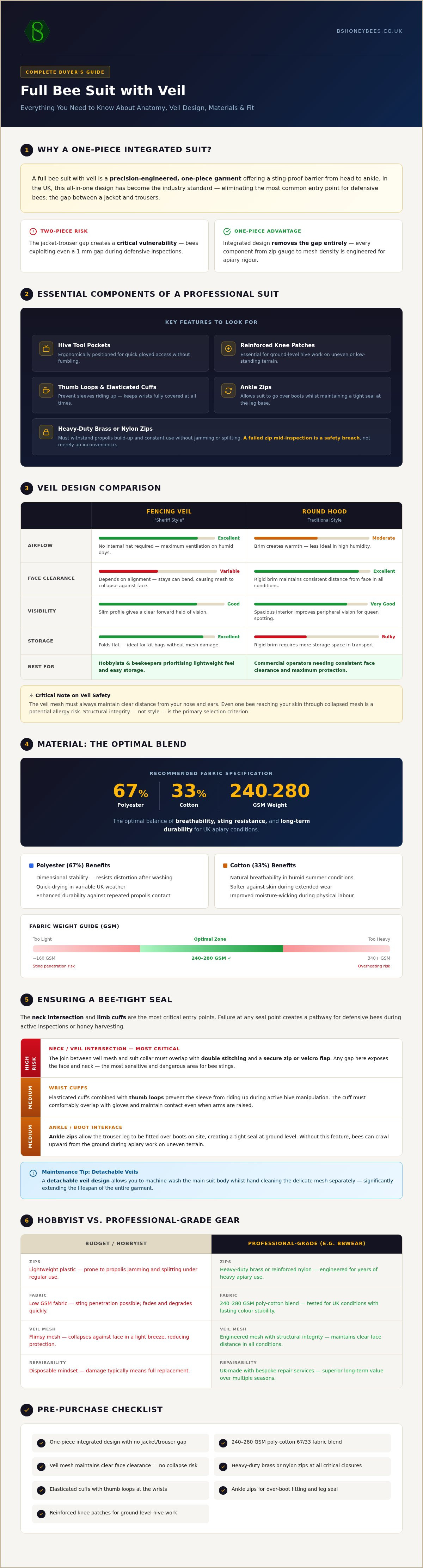
- Discover why a 67/33 poly-cotton blend at a 240-280 GSM weight provides the optimal balance of breathability and protection against persistent stings.
- Learn how to identify and secure critical entry points, particularly at the neck intersection and limb cuffs, to ensure total bee-tight integrity.
- Explore why investing in professional UK-made gear like BBWear offers superior long-term value through exceptional durability and bespoke repair services.
Understanding the Anatomy of a Full Bee Suit with Veil
A full bee suit with veil is an integrated one-piece garment designed to provide a sting-proof barrier from head to ankle. In the UK, this all-in-one design has become the industry standard for commercial beekeepers and serious hobbyists alike. It offers a level of security that separates simply cannot match. By removing the gap between jacket and trousers, you eliminate the most common point of entry for bees that are feeling defensive during a honey harvest or a late-season inspection. Choosing a professional full bee suit with veil ensures that every component, from the zip gauge to the mesh density, is designed for the rigours of a busy apiary.
The veil itself plays a dual role. It must offer total protection for the face and neck whilst facilitating maximum airflow to prevent the wearer from overheating. In a high-quality suit, the mesh is engineered to stay clear of the nose and ears. This structural integrity ensures that even if a bee lands on the veil, it cannot reach your skin. This clear distance is what separates professional gear from cheaper, flimsy alternatives that often collapse against the face in a light breeze.
The Evolution of Protective Apiary Wear
Beekeeping attire has moved far beyond the basic canvas smocks of the past. Modern designs reflect a deep understanding of UK weather patterns, where humidity and sudden temperature shifts are common. We've seen a transition toward high-specification materials that are thick enough to prevent sting penetration but light enough to allow for physical labour. The shift towards detachable veils has also been a game-changer for maintenance. It allows you to wash the main suit in a machine whilst cleaning the delicate mesh by hand, significantly extending the lifespan of your investment.
Essential Components of a Professional Suit
When you're managing productive colonies, the small details dictate your comfort and safety. Professional suits utilize heavy-duty brass or nylon zips. The gauge of these zips is vital; they must withstand propolis build-up and constant use without jamming or splitting. A failed zip in the middle of an inspection is more than an inconvenience; it's a safety breach. You should also look for the following features in a high-performance suit:
- Ergonomic Hive Tool Pockets: Specifically positioned for quick access without fumbling whilst wearing gloves.
- Reinforced Knee Patches: A necessity for ground-level hive work amongst low-standing stands or uneven terrain.
- Thumb Loops and Elasticated Cuffs: These prevent sleeves from riding up, ensuring the wrist remains covered at all times.
- Ankle Zips: These allow you to put the suit on over boots whilst maintaining a tight seal at the bottom of the leg.
The final seal is everything. Elasticated cuffs and ankle zips create a hermetic barrier, ensuring that inquisitive bees stay exactly where they belong: in the hive and not inside your suit. Investing in a suit with these technical features allows you to focus entirely on the health of your bees rather than worrying about your own protection.
Comparing Veil Designs: Fencing vs. Round Hoods
The choice of a headpiece is perhaps the most subjective part of selecting a full bee suit with veil. It's a decision that balances personal comfort against the practicalities of hive management. Your veil geometry directly influences how well you can see eggs in the bottom of a cell or track a queen moving amongst her workers. In the UK, beekeepers generally gravitate toward either the streamlined fencing veil or the spacious traditional round hood. Each style offers a different experience in terms of airflow, storage, and field of vision.
The Fencing Veil: Pros and Cons
Fencing veils, often referred to as "Sheriff style", are highly popular for their sleek, vertical design. They don't require an internal hat, which significantly improves airflow and comfort during those rare but intense humid British summer days. Because they fold flat, these suits are easier to store in a kit bag without damaging the mesh. The main drawback is that they require precise alignment. If the internal stays become bent or if the suit is poorly fitted, the mesh can collapse toward the face. This makes it easier for bees to reach the skin if they land on the veil. They're ideal for beekeepers who prioritise a lightweight feel and easy storage.
The Traditional Round Veil: Pros and Cons
The round hood remains the gold standard for many commercial operators due to its unrivalled "stand-off" distance. By using a rigid internal support or a dedicated hat, the mesh is kept far away from the face and neck at all times. This provides a 360-degree buffer zone that offers immense psychological and physical security. Visibility is generally superior in a round veil because the mesh stays taut and uniform, offering a wider field of peripheral vision. However, they're bulkier to store and can be a hindrance if you're working in tight apiaries with overhanging branches or narrow access. If you have the space to store it, the round hood often provides the most consistent visibility.
Visibility isn't just about the shape; it's about the material. High-quality suits utilise "Long Life Veiling" which is far superior to standard nylon mesh. This professional-grade material is UV-resistant, meaning it won't become brittle or yellow over time. It remains black and clear, which is essential for the high-contrast vision needed to spot tiny larvae or eggs. If you're ready to upgrade your protection, viewing the technical specs of BBWear bee suits is a great way to see these professional standards in practice.
Ultimately, your choice should reflect your environment. If you work in cramped spaces, the fencing style is a logical choice. If you prefer the maximum possible distance between you and the bees, the round hood is the way to go. Both designs, when executed with professional-grade materials, provide the security needed to manage your colonies with total confidence.
Material Matters: Balancing Sting Protection and Breathability
The fabric of your full bee suit with veil is the primary line of defence between your skin and a defensive colony. Selecting the right material is a technical decision that affects your safety, mobility, and comfort. In the UK, beekeepers face a unique challenge: managing high-productivity colonies during unpredictable, often humid summers. You need a fabric that is thick enough to prevent a stinger from reaching your skin but breathable enough to prevent heat exhaustion during a two-hour apiary session. This balance is achieved through specific textile engineering, starting with the weight of the cloth.
GSM, or Grams per Square Metre, is the metric used to measure fabric density. For a professional-grade suit, 240-280 GSM is the recognised "sweet spot". Anything lighter risks sting penetration, particularly where the fabric pulls tight against the shoulders or knees. Anything heavier becomes a liability in the heat, leading to fatigue and a loss of concentration. Colour choice is equally deliberate. Most professional suits are white or pale khaki because bees have evolved to view dark, fuzzy textures as potential predators, such as bears or badgers. Light colours help maintain a calm atmosphere in the apiary by not triggering these defensive instincts.
Poly-Cotton vs. Pure Cotton
While pure cotton may sound appealing for its natural feel, it rarely stands up to the demands of commercial beekeeping. Pure cotton suits tend to shrink significantly after the first few washes, often compromising the "full" fit and leaving ankles or wrists exposed. We recommend a 67/33 poly-cotton blend. This specific ratio provides several advantages:
- Industrial Durability: The polyester content allows the suit to withstand frequent, high-temperature washing to remove propolis and pheromones.
- Sting Resistance: Synthetic fibres create a "slicker" finish on the fabric surface. This makes it significantly harder for a bee to gain the necessary grip to drive its stinger through the weave.
- Structural Integrity: Poly-cotton blends hold their shape, ensuring the veil stays properly positioned and the seals remain bee-tight over multiple seasons.
Ventilated and 3D Mesh Technologies
The rise of "Ultra-Breathable" 3D mesh has changed how we approach summer beekeeping. These suits utilise a triple-layer sandwich of mesh that creates a physical gap larger than the length of a bee's stinger. Air flows freely through the layers, providing exceptional cooling. However, there is a trade-off. These suits are often bulkier and heavier than their poly-cotton counterparts. They're an excellent investment if you frequently work in high temperatures or manage particularly large, productive colonies where inspections take longer. For the average UK hobbyist, a high-quality full bee suit with veil in a standard poly-cotton blend remains the most versatile choice for year-round use.
Ensuring a Bee-Tight Seal: Critical Fastenings and Fit
A full bee suit with veil only works if its boundaries are secure. The most vulnerable area is almost always the "Neck Intersection". This is where the veil zips meet the main body zip. If these don't overlap perfectly, they leave a small, bee-sized gap. Defensive bees are experts at finding these thermal leaks. Always ensure your zip slides are pulled fully home and the protective Velcro flap is pressed firmly down. This simple check prevents the majority of incidents where a bee ends up inside the veil.
Your movement in the apiary also tests these seals. When you reach for a high super or kneel to inspect a floorboard, the fabric stretches. Use thumb loops and ankle elastic to keep your sleeves and trouser legs in place. Without these, reaching up pulls the cuff away from the glove, exposing the wrist. Before you approach the hive, run through this 5-point safety checklist:
- Neck Overlap: Confirm zips are fully closed and the Velcro tab is pressed flat.
- Wrist Seals: Ensure thumb loops are engaged and gloves are pulled securely over the cuffs.
- Ankle Integrity: Check that elastic is tight or zips are closed over your boots.
- Zip Tracks: Verify no fabric is caught in the teeth, which could create a hidden gap.
- Visual Mesh Check: Look for any new snags or tears in the veiling whilst the suit is on.
Zip maintenance is often overlooked by hobbyists. Propolis and grit can cause zips to stick or split under pressure. Rubbing a bit of clean beeswax along the teeth ensures a smooth, gap-free operation. For nylon zips, a quick spray of food-grade silicone can prevent the sliders from seizing. This attention to detail in professional maintenance ensures longevity, similar to how beauty professionals rely on a high-specification UV lash system and adhesive for precision and durability in their own trade. Keeping these components functional is vital for maintaining a reliable full bee suit with veil over several seasons of heavy use.
The Importance of Correct Sizing
Always size up when buying a bee suit. A tight suit is a dangerous suit. When fabric is pulled taut against your skin at the shoulders or knees, a bee's stinger can easily reach you. A baggy fit creates a protective air cushion. This gap means that even if a bee stings the fabric, the stinger never reaches your skin. Perform the "crouch test" by putting the suit on and squatting down. If the fabric pulls tight against your back or thighs, you need a larger size.
Maintaining Seal Integrity Over Time
Velcro is a magnet for hive debris and grass seeds. Over time, this "fluff" prevents the hooks from grabbing the loops, leading to seals that pop open at the worst possible moment. Clean your Velcro tabs regularly with a stiff brush. If you notice small tears in the mesh, repair them immediately with a needle and thread or a small patch of mesh. However, if the veiling becomes brittle or has multiple large repairs, it's safer to replace the veil entirely. You can view professional BBWear suits to see how high-quality fastenings are designed to last through years of commercial use without failing.
The Professional Choice: Why Invest in BBWear Suits?
BBWear has earned its reputation as the gold standard for UK beekeepers through decades of consistent performance in commercial apiaries. Whilst the market is flooded with budget imports, professional beekeepers and commercial honey producers almost exclusively rely on BBWear. The reason is simple; these suits are built for the rigours of daily use in the British climate. Because they are manufactured in the UK, you benefit from a level of quality control that mass-produced garments cannot match. This local production also offers a unique advantage: a professional repair service. If you snag your mesh or damage a zip after years of use, you don't have to discard the entire garment. You can have it restored by the people who made it, ensuring your full bee suit with veil remains a reliable asset for years.
Professional gear is particularly essential when managing high-performance colonies. For those working with F1 Buckfast Queens UK, the sheer volume of bees during the peak summer season requires absolute confidence in your PPE. Prolific queens produce massive populations that demand efficient, focused inspections. Knowing your suit is impenetrable allows you to work swiftly and methodically without the distraction of potential stings. Over time, the return on investment becomes clear. A single BBWear suit frequently outlasts three cheaper alternatives, making it the most cost-effective choice for anyone serious about their craft.
A Synergy of Quality: Bees and Gear
The relationship between a beekeeper and their colony is a subtle feedback loop. If you are nervous or flinch because of a poorly fitting veil or an insecure seal, the bees will sense that agitation and respond accordingly. A trusted suit provides a vital psychological buffer. It keeps you calm, which in turn leads to calmer bee behaviour. This is especially important when you are first hiving honey bee nucs for sale UK. At BS Honey Bees Ltd, we only stock equipment that we use in our own commercial operations. We understand that the right gear isn't just about safety; it's about the quality of your beekeeping experience and the success of your colonies.
The BBWear Buyer’s Guide
Choosing the right model depends on your specific apiary environment and the number of colonies you manage. BBWear offers various ranges to suit different needs, from the robust Basic models to the high-specification Ultra suits designed for maximum ventilation. For a deeper dive into specific models and a detailed breakdown of features, see our BBWear Bee Suit guide. Ordering your professional full bee suit with veil through BS Honey Bees Ltd ensures you receive expert support from beekeepers who understand the technical requirements of the British beekeeping season. Investing in professional gear is a commitment to your long-term safety and the productivity of your apiary.
Take Command of Your Apiary Safety
Mastering the technical nuances of your protective gear is the foundation of confident beekeeping. By prioritising a high-quality full bee suit with veil, you ensure that every hive inspection is defined by focus rather than fear. We've explored how the correct GSM weight prevents stings whilst specialised veil designs maintain your peripheral vision. Remember that a bee-tight seal is only as good as your maintenance routine; check those zips and Velcro tabs regularly to keep your protection at professional standards.
As expert UK breeding specialists and an authorised BBWear retailer, BS Honey Bees Ltd provides the same field-tested equipment we use in our own commercial apiaries. We offer nationwide delivery on all hardware to ensure you have access to the best protection regardless of your location. Don't settle for budget imports when your safety and comfort are on the line. Browse our range of professional BBWear Bee Suits today and invest in a garment that will serve you for many seasons to come. Your bees are a long-term investment; your safety gear should be too. Happy beekeeping!
Frequently Asked Questions
What is the best type of veil for a beginner beekeeper?
The round hood is generally the best choice for beginners because it provides the most consistent "stand-off" distance from the skin. Its rigid internal structure ensures the mesh stays far from your face and ears even if you move suddenly or work in windy conditions. This extra space builds vital confidence whilst you learn the nuances of hive management and frame handling.
How do I wash my full bee suit without damaging the veil?
Always detach the veil before washing the main garment. Machine wash the suit body at 40°C using a non-biological detergent to remove propolis and pheromones. Hand wash the veil separately in a basin of warm, soapy water; this prevents the internal support rings from warping and protects the delicate mesh from snagging on zips or Velcro during a machine cycle.
Can bees sting through a poly-cotton bee suit?
Bees can only sting through a poly-cotton suit if the fabric is pulled tight against your skin. A professional full bee suit with veil featuring a 240-280 GSM weight is designed to be sting-proof when worn with a baggy fit. The polyester content also creates a slicker surface that makes it significantly harder for bees to gain the grip necessary to drive a stinger through the weave.
Should I choose a fencing veil or a round hood for better visibility?
A round hood typically offers superior visibility because the mesh is held taut in a uniform circle, providing an unobstructed 360-degree field of view. Fencing veils are more streamlined for narrow apiary paths but can occasionally limit peripheral vision if the internal stays aren't perfectly aligned. For the high-contrast vision needed to spot tiny eggs in cells, the consistent tension of a round hood is usually preferred.
How do I know what size bee suit I need?
You should always size up at least one or two sizes from your regular street clothing. A correct fit is confirmed by the "crouch test": squat down fully and ensure the fabric doesn't pull tight across your back, shoulders, or thighs. This bagginess is intentional; it creates the essential air gap that ensures a bee's stinger cannot reach your skin even if they land on the suit.
What should I wear underneath my bee suit for extra protection?
Wear light-coloured, breathable base layers that provide full coverage for your arms and legs. Avoid dark colours or textured fabrics like wool, as these can trigger defensive instincts in bees who associate them with natural predators. High-performance wicking fabrics are ideal for the UK climate, as they manage moisture during humid summer inspections whilst adding a secondary layer of protection.
To soothe and protect your skin after a long day in the apiary, check out Beessential for expert advice on natural skincare ingredients like cupuacu butter.
How often should I replace my beekeeping veil?
Replace your veil as soon as the mesh becomes brittle, yellowed, or heavily repaired. UV exposure eventually degrades nylon mesh, and if you find it difficult to see larvae clearly, your safety is compromised. A high-quality full bee suit with veil should last many seasons, but the headpiece is a precision tool that requires replacement if its structural integrity or clarity fails.
Are ventilated bee suits actually cooler in the summer?
Ventilated suits are significantly cooler because their triple-layer 3D mesh allows air to circulate directly through the garment. They are slightly heavier than standard poly-cotton suits, but the breathability they offer during the peak of the UK nectar flow is unrivalled. The thickness of the mesh sandwich also provides a physical barrier that is deeper than the length of a bee's stinger, offering excellent protection in high temperatures.