Opening a hive to find the dreaded "queenless roar" or a sudden surge in aggressive behaviour is enough to make any beekeeper's heart sink. If you're unsure what to do with a queenless hive uk beekeeping often feels like a race against time to prevent a total colony collapse. It's a high-stakes moment where confusion between a hidden virgin queen and a truly queenless state can lead to costly errors. We understand the stress of managing a colony that has lost its focus and the professional urgency required to put things right.
This guide provides a clear, professional framework to accurately diagnose your hive's status using a diagnostic test frame before you commit to any commercial intervention. You'll learn how to implement the precise techniques required to save your bees, whether that involves requeening with high-quality F1 Buckfast or Carniolan genetics or safely uniting the colony. By following this structured plan, you can restore a calm temperament to your apiary and ensure your bees have the best chance of thriving through the British season.
Key Takeaways
- Recognise the distinctive 'queenless roar' and absence of worker brood to identify colony distress before it leads to a total collapse.
- Perform a 'test frame' with young larvae to confirm queenlessness definitively before you invest in a new mated queen.
- Master the professional steps for what to do with a queenless hive uk conditions dictate, including how to choose between requeening and uniting based on colony strength.
- Identify the specific signs of laying workers, such as multiple eggs per cell and bullet-shaped drone cappings, to avoid wasting high-value genetics.
- Restore a calm temperament and prolific laying pattern to your apiary by prioritising F1 genetics during the requeening process.
Identifying a Queenless Hive: Key Signs and Symptoms
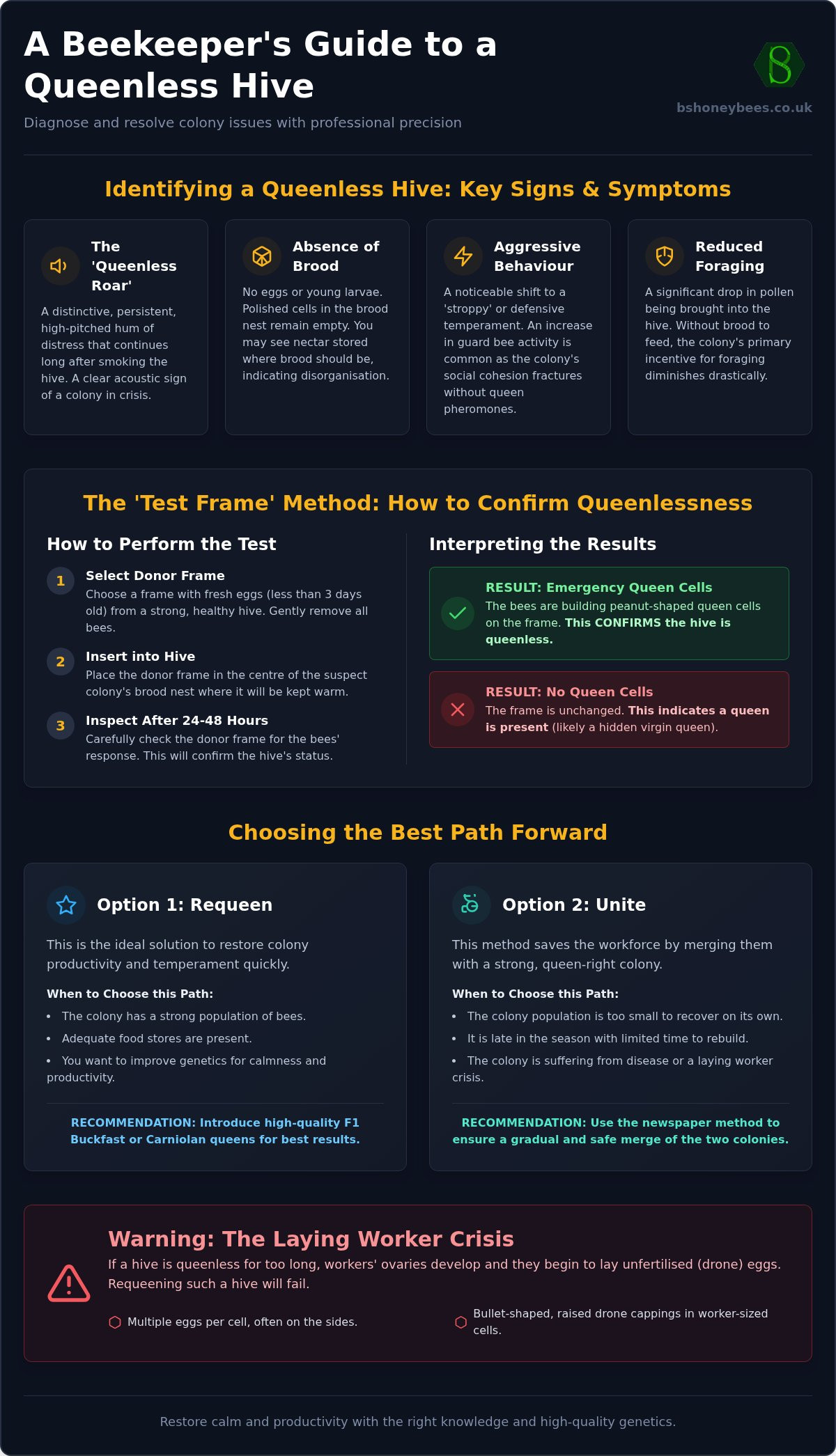
Opening a hive and failing to spot eggs or young larvae is the first red flag. During a mid-season inspection, you expect a prolific brood pattern. If the frames are empty of open worker brood, the colony is likely in crisis. The Queen bee is the heartbeat of the colony; without her pheromones, the social structure begins to fracture. You might also notice emergency queen cells. These are often found on the face of the comb, constructed in haste from existing worker larvae. This is a key distinction from supersedure cells, which are typically found hanging from the edges of the frame. Emergency cells are a clear signal that the bees have recognised a sudden loss and are attempting a rescue.
Sound is another critical diagnostic tool. Experienced beekeepers recognise the "queenless roar" immediately. It is a persistent, higher-pitched hum that continues long after you've finished smoking the hive. It sounds like a collective moan of distress. If you're questioning what to do with a queenless hive uk weather patterns can sometimes make bees flighty, but this specific acoustic shift is a reliable indicator. This roar is often accompanied by bees "fanning" at the entrance or on the tops of the frames, desperately trying to circulate pheromones that are no longer there.
Visual Cues on the Brood Frame
Look closely at the centre of the brood nest. In a healthy hive, the workers prepare cells by polishing them to a high shine for the queen. In a queenless state, you'll see these polished cells, but they remain stubbornly empty. Don't confuse this with a hive that has a newly mated queen. A virgin or newly mated queen will be slim and move quickly, whilst the bees will still maintain a cohesive "nest" structure. A truly queenless hive often looks disorganised, with nectar stored in the brood area where eggs should be. Identifying this lack of structure is essential before you attempt to requeen.
Colony Temperament and Foraging Behaviour
Pay attention to the hive entrance before you even lift the crown board. Queenless colonies often display "stroppy" or aggressive behaviour that's out of character for the strain. You'll see an increase in guard bee activity and a noticeable lack of pollen being brought in. Without brood to feed, the incentive for heavy foraging drops. This shift in temperament is a direct result of pheromone depletion. If your previously calm bees are suddenly pinging your veil, it's time to investigate. Knowing what to do with a queenless hive uk beekeepers manage requires this level of observational precision. Prompt action is necessary to prevent the colony from spiralling into a laying worker situation.
The 'Test Frame' Method: How to Confirm Queenlessness
Before you rush to order a new queen, you must verify the hive's status. Buying a mated queen for a colony that already has a hidden virgin is a waste of resources; the workers will likely kill the newcomer immediately. The test frame is the most effective way to determine what to do with a queenless hive uk beekeepers encounter during the active season. It involves taking a frame of young larvae and eggs from a strong, healthy "donor" hive and placing it into the suspect colony. If the bees are truly queenless, they'll start building emergency queen cells on this new frame within 24 to 48 hours.
Inserting the Donor Frame
Success depends on selecting the right material. Choose a frame from your best colony that contains eggs less than three days old. These look like tiny grains of rice standing upright at the bottom of the cell. Gently shake off all the nurse bees back into the donor hive to ensure you don't accidentally move the queen. Work quickly to maintain the correct thermal environment. Chilling the brood during transfer can kill the very larvae the bees need to signal their state. Place this donor frame in the centre of the queenless colony's cluster, where the heat is most consistent. Mark the top bar of the frame clearly with a drawing pin or a bright pen so you can find it easily during your follow-up inspection.
Reading the Bees' Response
Return to the hive after two days. If you see peanut-shaped emergency queen cells being built on the donor frame, your diagnosis is confirmed. At this stage, you have a clear choice: let them raise their own queen or, for better results, knock down those cells and introduce F1 Buckfast or Carniolan queens to restore productivity faster. If there are no queen cells, the colony likely has a queen present, perhaps a virgin that hasn't started laying yet. In cases where the colony is too weak to recover even with a new queen, you might consider Uniting Colonies to save the remaining workforce. The emergency response on a test frame is the only 100% reliable diagnostic tool for a beekeeper. This method removes the guesswork and ensures your next steps are based on the bees' own biological signals rather than assumptions.
Requeening vs. Uniting: Choosing the Best Path
Once you've confirmed your colony is queenless, you face a critical choice. Should you invest in a new queen or unite the remaining bees with a stronger colony? This decision depends heavily on the time of year and the current population. Determining the best course of action for what to do with a queenless hive uk beekeepers manage requires a balance of biological understanding and logistical timing. In May or June, a strong queenless colony is worth saving; in late August or September, the priority shifts to winter survival, so uniting is often the more professional choice.
Assess the colony strength carefully before making your move. A colony with fewer than four frames of bees will struggle to support a new queen and build up enough "winter bees" to survive the cold months. Purchasing a mated queen is a proactive investment in your apiary's productivity, but it only pays off if the colony has the workforce to care for her brood. If the population is too sparse, cut your losses. Uniting these bees with a healthy colony preserves the workforce without the risk of a failed introduction or a colony that's too weak to endure the winter.
Introducing a New Mated Queen
For colonies with a healthy population, introducing a high-quality mated queen is the fastest way to restore order. Many UK beekeepers prefer F1 Buckfast Queens UK because of their prolific laying patterns and exceptional calm. When the queen arrives, use a plastic introduction cage with a candy plug. This allows the colony to get used to her pheromones before they can physically reach her. Consult the BBKA guide to introducing a new queen for specific cage placement strategies. Once the cage is in place, leave the hive alone for at least 7 days. Opening the hive too early can cause the bees to "ball" and kill the new queen in a fit of stress.
The Newspaper Method for Uniting Hives
If the colony is weak or it's too late in the season to requeen, uniting is the most reliable strategy. Use the newspaper method to merge the queenless colony with a queen-right one. Start by removing every single queen cell from the queenless colony; failing to do this can lead to a fight that kills your good queen. Place a single sheet of newspaper over the top of the queen-right colony and prick a few small holes in it with a pin. Place the queenless brood box on top. The bees will slowly chew through the paper, allowing their scents to mix gradually. This prevents the immediate aggression often seen when shaking bees out. Ensure the top box has adequate ventilation whilst this process occurs, especially during a summer flow.
The Laying Worker Crisis: How to Spot and Fix It
When a colony remains queenless for an extended period, usually three weeks or more, it faces a terminal condition known as laying workers. Without the queen's pheromones to suppress their reproductive systems, certain worker bees begin to lay unfertilised eggs. Identifying this early is vital when deciding what to do with a queenless hive uk beekeepers find themselves managing. You will notice multiple eggs in a single cell, often stuck haphazardly to the sides rather than placed neatly in the centre. This disorganised pattern is a clear sign that the colony's social order has collapsed.
The visual evidence becomes even more obvious once the brood is capped. Since workers can only lay unfertilised eggs, they only produce drones. These drones are raised in worker-sized cells, leading to "bullet-shaped" cappings that protrude significantly from the frame. The colony enters a delusional psychological state; the bees believe they are queen-right because of the presence of these laying workers. This makes them exceptionally hostile to any genuine queen you attempt to introduce. Unlike a standard queenless colony, a laying worker hive will almost always kill a new queen immediately unless you take drastic corrective action.
The 'Shake Out' Technique
Fixing a laying worker crisis requires a firm, professional approach. The most reliable method is the 'shake out' technique. Carry the entire hive approximately 30 yards away from its original location. Spread a white sheet on the ground and shake every single bee onto it. The foragers and healthy workers will fly back to the original site. Crucially, the laying workers are heavy with eggs and have not performed orientation flights for weeks. They generally fail to find their way back. On the original site, set up a fresh British National beehive with drawn comb to receive the returning foragers. This effectively "filters" the problematic bees out of the population.
Rehabilitating the Colony
Once the foragers have returned, the colony requires a period of rehabilitation. Adding a frame of open brood from a donor hive every week for three weeks is the gold standard for recovery. The pheromones emitted by the young larvae work to suppress the ovaries of any remaining laying workers. This process gradually shifts the colony's mood back to a state where they recognise their queenless status and become receptive to a new leader. The laying worker state is a biological dead-end for the colony that requires disciplined, multi-week intervention to reverse. If your colony has reached this point, you will need reliable replacements to rebuild your numbers. You can order mated queens and nucs to restore your apiary's productivity once the laying worker behaviour is successfully suppressed.
Securing Your Colony’s Future with High-Quality Genetics
Reintroducing a queen is only half the battle. Long-term success depends entirely on the quality of the genetics you introduce. When considering what to do with a queenless hive uk beekeepers often find that an aggressive, disorganised colony is completely transformed by a queen with a superior temperament. F1 genetics provide a prolific laying pattern and a calm, manageable disposition that makes future inspections a pleasure. This is particularly critical when requeening a colony that has been stressed or defensive during its queenless period. Take the time to prepare your British National hive frames by clearing away any brace comb and ensuring the new queen has clean, drawn cells for immediate laying. Ordering mated queens for next-day delivery is the most professional way to minimise colony downtime and restore the hive's momentum.
Buckfast vs Carniolan: Which is Best for Rescue?
Deciding between Buckfast vs Carniolan bees is a strategic choice for any rescue operation. Buckfast queens are famous for their explosive spring buildup and their ability to maintain large, productive colonies with a low swarming instinct. They are the gold standard for beekeepers wanting to maximise honey crops after a mid-season setback. Carniolans, however, are exceptional foragers in the often damp and cooler UK climates. They are incredibly thrifty with winter stores and respond rapidly to the first signs of a nectar flow. Sourcing from a DASH-accredited UK breeder ensures high standards of disease resistance and genetic purity, giving your rescued colony the best possible start.
Long-term Colony Management
Preventing a repeat of a queenless crisis requires disciplined management and the right equipment. Understanding what to do with a queenless hive uk beekeepers face means being prepared before the problem arises. Maintain a spare 2 in 1 poly nuc in your apiary at all times. These units are invaluable for emergency queen rearing or for keeping a "spare" queen-right nuc ready to support a failing colony. Regular, methodical inspections are your best defence. Use a clear record-keeping system to track queen age and brood patterns. By spotting a failing queen early, you can intervene proactively, ensuring your apiary remains productive and your bees remain calm throughout the season.
Restore Order and Productivity to Your Apiary
Identifying a queenless state requires a blend of observational skill and disciplined diagnostic testing. By confirming the colony's status with a test frame and choosing the right path between requeening and uniting, you protect your apiary from unnecessary decline. Knowing exactly what to do with a queenless hive uk conditions require ensures you can act decisively to restore a calm temperament and a prolific laying pattern. Prompt intervention is the difference between a lost colony and a thriving honey producer.
As DASH accredited specialist breeders, we prioritise both the quality of our output and the success of your beekeeping. You can rescue your colony today with a premium F1 Mated Queen from BS Honey Bees Ltd. We provide high-performance F1 Buckfast and Carniolan genetics, delivered with the speed and reliability of next-day Royal Mail Special Delivery to minimise colony downtime. Trust your diagnostics, choose superior genetics, and you'll soon see your colony back to its productive best.
Frequently Asked Questions
How long can a beehive survive without a queen in the UK?
A colony can survive for several weeks, but its population will decline rapidly as older bees die off without replacement. In the UK climate, a hive without a queen for more than 21 days risks developing laying workers, which is often a terminal condition. You should aim to intervene within the first 10 days of noticing queenlessness to ensure there is still a sufficient workforce to support a new queen.
Will a queenless hive eventually make its own queen?
The bees can only raise a new queen if they have access to eggs or larvae less than three days old. If the queen is lost suddenly and no young brood is present, the colony has no biological means of replacing her. In these instances, you must provide a donor frame of eggs from another hive or introduce a new mated queen to prevent the colony's collapse.
Can I just put a new queen in a queenless hive immediately?
Immediate introduction is risky and often leads to the queen being killed. You must confirm the hive is truly queenless and has no virgin queen or laying workers present before introducing a new one. Always use an introduction cage to allow the bees to habituate to her pheromones. This controlled release significantly increases the chances of a successful acceptance.
What is the difference between a queenless roar and normal hive noise?
A queenless roar is a persistent, higher-pitched hum that sounds like a collective moan of distress. Unlike the steady, low-frequency buzz of a contented colony, this roar often intensifies when the hive is opened and continues long after you've finished your inspection. It's a clear acoustic signal that the social organisation of the hive has been disrupted by pheromone loss.
How do I know if my hive has a virgin queen or is truly queenless?
Perform a diagnostic test frame by adding a frame of young eggs from a healthy donor colony. If the bees build emergency queen cells on that frame, they are confirmed queenless. If they ignore the eggs and simply nurse them, a virgin queen is likely present. This test is the most reliable way to decide what to do with a queenless hive uk beekeepers can use.
What happens if I don't fix a queenless hive?
The colony will eventually perish as the worker population reaches the end of its lifespan without being replaced. Without the suppressive pheromones of a queen, worker bees may develop ovaries and start laying unfertilised drone eggs. Once a hive reaches this "laying worker" state, it becomes much harder to rehabilitate and will eventually dwindle to nothing.
Is it too late in the season to requeen my hive in September?
September is often too late for a new queen to produce enough "winter bees" to ensure the colony's survival. In the UK, the priority shifts to winter preparation as the temperatures drop. At this late stage, the most professional choice is usually to unite the queenless bees with a strong, queen-right colony using the newspaper method to bolster their numbers for the cold months ahead.
Can I use a nucleus colony to fix a queenless hive?
Uniting a nucleus colony with a larger queenless hive is an excellent way to restore order. This provides the failing colony with a proven queen, a balanced brood nest, and a fresh workforce all at once. It's a highly effective strategy for what to do with a queenless hive uk apiaries encounter during the peak of the foraging season.