Your 2026 honey harvest isn't decided during the summer flow; it's determined the moment you decide whether your current queen is fit for purpose. Every beekeeper knows the stress of aggressive bee behaviour that turns a routine inspection into a battle, or the sight of a patchy brood pattern that signals a failing monarch. Knowing exactly when to requeen a hive uk specialists advise is the key to maintaining a calm and productive apiary. It's natural to fear a colony becoming hopelessly queenless during a failed introduction, but leaving an underperforming queen in place is a far greater risk to your seasonal success.
This guide provides the professional clarity you need to manage your stocks with assertive confidence. You'll learn to identify the precise indicators of queen failure and master the timing required to synchronise with British forage cycles. We will cover the best techniques for introducing high-quality genetics, ensuring your bees remain gentle and highly productive. By the end of this article, you'll have a clear roadmap for the 2026 season, allowing you to approach your hives with the skill of a specialist and the calm of a mentor.
Key Takeaways
- Master the seasonal timing of your intervention by learning exactly when to requeen a hive uk specialists advise to capitalise on early spring and summer forage cycles.
- Identify the visual indicators of a failing queen, such as "shotgun" brood patterns or drone-laying behaviour, to prevent your colony from becoming hopelessly queenless.
- Implement a professional "Day 0" protocol for queen removal and introduction that ensures high acceptance rates and maintains colony stability.
- Understand the productivity benefits of F1 Buckfast and Carniolan genetics, which offer superior temperament and lower swarming tendencies for the British beekeeper.
- Ensure your apiary management remains efficient and safe by using high-standard protective gear, such as BBWear suits, during the sensitive requeening process.
Why Requeening is Essential for UK Colony Survival
Requeening is the deliberate act of removing an underperforming or aged queen and introducing a young, mated successor. It's a cornerstone of modern apiary management that ensures your livestock remains an asset rather than a liability. Understanding the role of the queen bee is vital; she isn't just an egg-layer, but the genetic and chemical heart of the colony. Knowing exactly when to requeen a hive uk specialists recommend is a skill that separates the hobbyist from the professional. Whilst traditionalists often cite the "Three-Year Rule", many modern beekeepers move toward performance-based replacement. If a queen fails to meet standards in her second year, she's replaced to maintain colony vigour.
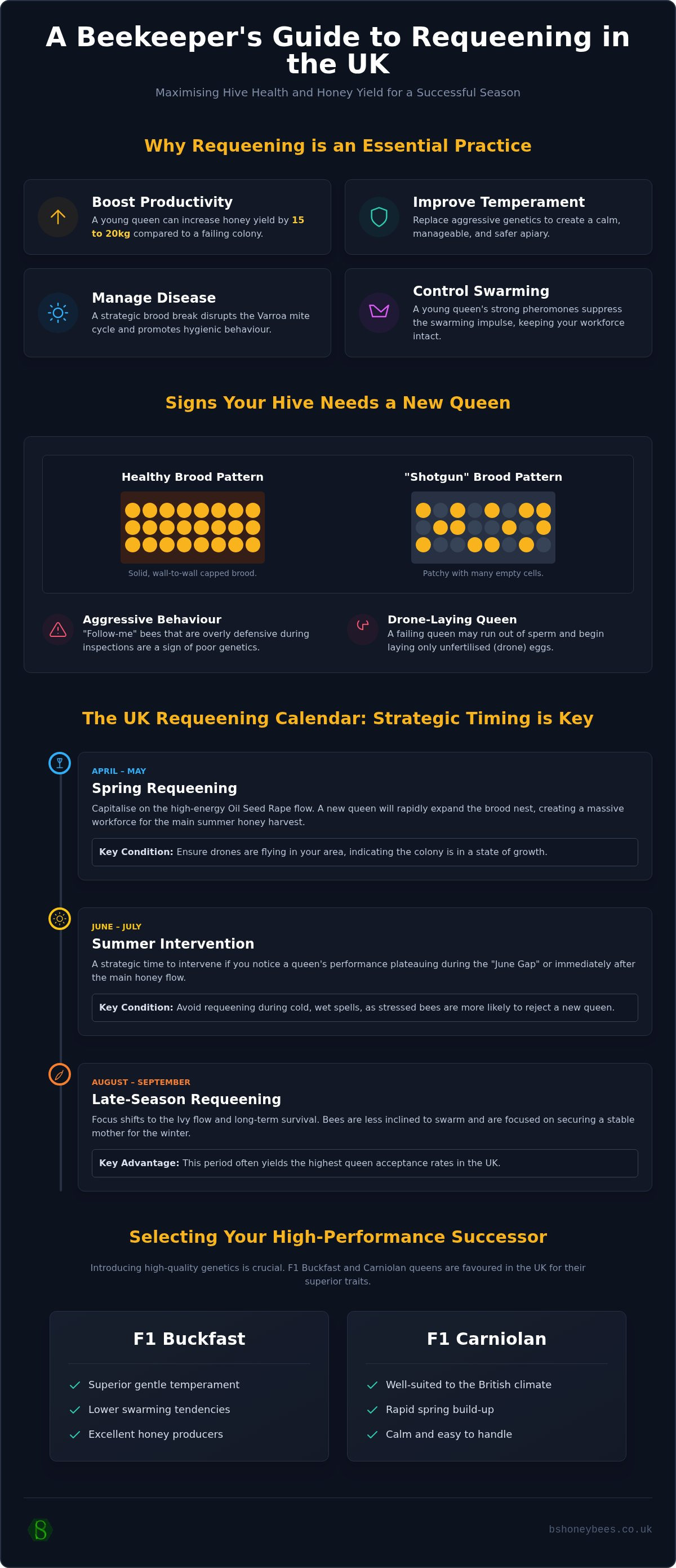
A young queen brings immediate benefits to the hive's biology. Her strong pheromones effectively suppress the swarming impulse, keeping your workforce intact during the critical honey flow. She also tends to lay later into the autumn, providing a fresh population of "winter bees" with the fat bodies needed to survive a damp British winter. From an economic perspective, a high-quality mated queen is an investment that pays for itself. A productive colony can easily produce an extra 15 to 20kg of honey compared to a failing one, making the cost of replacement negligible compared to the potential yield.
Addressing Aggressive Behaviour and Temperament
Aggression in the apiary is often the primary reason beekeepers investigate when to requeen a hive uk stocks. Defensive "follow-me" bees that pursue you across the garden aren't just a nuisance; they're a safety risk to you and your neighbours. This trait is often the result of "mongrel" genetics introduced by local drones over several generations. By introducing a gentle honey bee breed UK suppliers provide, you can transform a hostile hive into a calm, manageable colony. Inspections become faster and more enjoyable when you don't have to fight your bees at every frame.
Breaking the Brood Cycle for Disease Management
Requeening offers a powerful, non-chemical opportunity for Integrated Pest Management (IPM). The brief gap between removing the old queen and the new one starting to lay creates a strategic brood break. This interruption significantly disrupts the reproductive cycle of Varroa mites, which require capped brood to multiply. Additionally, a vigorous young queen stimulates improved hygienic behaviour amongst the workers. This trait helps the colony detect and remove diseased larvae, providing a natural defence against threats like Chronic Bee Paralysis Virus (CBPV) and other brood-related pathogens that can devastate an apiary.
The Best Time of Year to Requeen in the UK
Successful beekeeping in Britain relies on synchronising your management with the environment. Deciding when to requeen a hive uk beekeepers often find, is dictated more by nectar flows than by the calendar. Spring requeening, typically between April and May, allows a colony to capitalise on the high-energy Oil Seed Rape (OSR) flow. A young, prolific queen introduced during this window can rapidly expand the brood nest. This creates a massive workforce just in time for the primary summer harvest. However, you must ensure drones are flying in your area before starting, as this indicates the colony is in a biological state of growth.
Summer requeening occurs during the "June Gap" or immediately after the main honey flow in July. This is a strategic time to intervene if you notice a queen's performance plateauing. By August and September, the focus shifts toward the Ivy flow and long-term survival. Late-season requeening often results in the highest acceptance rates in the UK. At this stage, the bees are less inclined to swarm and more focused on securing a stable mother for the winter months. If you notice your current queen's performance dipping during the summer harvest, it's wise to secure a mated queen early to ensure you don't miss the autumn window.
The Impact of the British Weather on Queen Introduction
The erratic nature of the British climate is a major factor in queen acceptance. You should avoid requeening during the cold, wet spells common in the 2026 season. Bees are naturally more defensive and stressed when they cannot forage. This heightened tension makes them far more likely to reject a new queen. There is a direct relationship between forage availability and the bees’ willingness to accept a stranger. If you must requeen during a nectar dearth, use "dummy" feeding. Providing a light 1:1 sugar syrup simulates a natural flow. This tricks the colony into a state of abundance, making the workers more receptive to their new monarch.
Requeening Before the Winter Cluster
Entering the dormant period with a young queen is one of the best ways to ensure winter survival. A queen introduced in late summer will continue laying well into the autumn. This provides a high population of young "winter bees" that haven't been exhausted by summer foraging. You must ensure the new queen has enough time to establish a solid brood nest before the temperatures drop in October. For most UK regions, September is the final cut-off point. Attempting to requeen later than this is risky. The bees may already be forming a tight cluster, making it difficult for the new queen to move through the hive and establish her pheromonal authority.
Identifying the Signs: When Your Queen Has Reached Her Limit
A failing queen is a liability that can collapse a colony before the summer flow even begins. You don't need to find the queen to know she's failing; you simply need to read the frames. A "shotgun" brood pattern, where the brood is scattered with frequent empty cells, is the most common indicator of declining fertility. It suggests the queen is failing to fertilise eggs or that the workers are removing larvae due to genetic defects. This is a primary signal for when to requeen a hive uk beekeepers should never ignore. If the brood nest looks like a pepper pot rather than a solid slab of capped larvae, her time is up.
If you see multiple eggs in a single cell or bullet-shaped cappings on worker-sized cells, you've likely reached the point of no return. A drone-laying queen or the presence of laying workers indicates a total breakdown in colony pheromones. Physically, an aged queen will often appear shiny and hairless on her thorax. Her wings may be tattered, and her movement across the comb will be sluggish compared to the vigorous pace of a young F1 queen. Monitor your colony's growth during the spring build-up. If your bees are lagging behind the local average whilst your neighbours' hives are boiling over, the queen is almost certainly the bottleneck.
Interpreting Queen Cells: Supersedure vs Swarming
The position of queen cells on the frame serves as a critical diagnostic tool. Cells found hanging from the bottom of the frame usually indicate a swarming impulse. However, cells built in the centre or top of the comb are typically supersedure cells. This is the colony's desperate attempt to replace a failing monarch. You should identify signs of a failing queen bee before this process begins. Relying on the colony to "self-requeen" is risky. It often results in a virgin queen mated with poor-quality local drones, leading to defensive behaviour and lower honey yields in the following season.
The "Temper Test" for Modern Apiaries
Evaluating temperament is essential for maintaining a manageable apiary. If a previously calm colony becomes "grumpy" or defensive during routine inspections, it's often a sign of queenlessness or deteriorating genetics. You must assess whether the behaviour is a temporary reaction to weather or a permanent shift in the colony's disposition. Runny bees are workers that scuttle nervously across the comb or spill over the edges of the frame during an inspection, signalling a lack of pheromonal control and a clear need for a new queen. When bees lose their composure and become difficult to work, introducing a queen with proven, gentle traits is the only professional solution.
How to Requeen a Hive Safely: A Step-by-Step Method
Finding the queen is often the most daunting hurdle for beekeepers. Once you have identified when to requeen a hive uk conditions are optimal, you must commit to the "Day 0" protocol. This begins with the absolute removal of the old queen. Without her departure, the colony will never accept a new monarch. If you cannot find her on the first pass, don't rush the process. Accuracy is more important than speed.
Systematic Queen-Finding Techniques
If she remains elusive, use a queen excluder to "sieve" the bees. Move the brood box to one side and place a new box on the original stand. Place a queen excluder over the new box and shake the bees from each frame onto the mesh. The workers will pass through, leaving the queen visible on top. Alternatively, use the "divide and conquer" method by splitting the brood box into two sections and waiting twenty minutes. The section containing the queen will remain calm, whilst the queenless side will show agitated behaviour. Wearing a high-quality BBWear bee suit increases your confidence during these long searches, allowing you to focus on the comb without the distraction of defensive workers.
After removal, you must choose your timing. The 24-hour "mourning period" is efficient, but the 8-day "hopeless" method is safer for beginners. By waiting eight days, the colony will have capped all existing larvae, meaning they cannot raise a rival queen from their own stock. You must then inspect every frame and destroy every single emergency queen cell. Missing even one cell will result in the colony rejecting your new purchase. This is a critical step that requires a methodical, frame-by-frame search.
The Mechanics of the Introduction Cage
Your new queen will arrive in a shipping cage with attendants and a candy plug. Position the cage between two frames of open brood, ensuring the mesh side is accessible so the workers can feed her and pick up her scent. Ensure the cage is oriented so the candy plug is at the top or side; if it faces down, a dying attendant could block the exit. For high-value genetics, some professionals prefer a "push-in" cage. This allows the queen to begin laying immediately on a patch of emerging brood, which significantly increases her acceptance rate.
Once the cage is secured, pull the plastic tab to expose the candy. The bees will eat through this over 48 hours, providing a slow, safe release. Close the hive and wait. Patience is the most critical factor now. You must wait a full seven days before reopening the hive. Breaking this "hands-off" week to "just check" is the leading cause of queen balling and rejection. To ensure the highest success rates, always order mated queens from a reputable specialist who provides pheromone-strong stock.
Selecting the Successor: F1 Buckfast and Carniolan Queens
Selecting the right genetics is just as critical as knowing when to requeen a hive uk conditions permit. F1 genetics provide a level of predictability and performance that locally mated queens cannot replicate. Whilst "local" bees are often touted for hardiness, they frequently lack the selective breeding required for high honey yields and a calm temperament. For the 2026 season, be sure to source mated queen bees UK specialists have health-certified. This ensures your apiary remains free from notifiable diseases and starts the season with maximum vigour.
The choice between Buckfast and Carniolan depends on your local environment and management style. Buckfast bees are prized for their prolific laying and exceptionally low swarming tendencies. They are perfect for beekeepers who want large, stable colonies that focus entirely on the honey flow. Carniolans offer a different advantage. They are known for an explosive spring build-up and the ability to forage in cooler, overcast weather. This makes them highly effective in northern regions or areas with early forage like Oil Seed Rape. Both breeds represent a significant upgrade over unmanaged local stocks.
Why F1 Buckfast Queens are the UK Gold Standard
The Buckfast bee is the result of decades of meticulous work by Brother Adam at Buckfast Abbey. It's a breed specifically adapted to the volatility of the British climate. By choosing F1 buckfast queens UK suppliers offer, you are investing in first-generation offspring from elite breeder stock. This preserves the hybrid vigour and gentle traits that make them so popular. Always verify the pedigree of your queen by checking the breeder's credentials. A true F1 queen will transform the behaviour of a previously aggressive colony within a single brood cycle, making your inspections far more enjoyable.
Ordering and Receiving Your Mated Queen
Managing the logistics of live bee delivery requires precision. When your queen arrives, check the cage immediately to ensure she and her attendants are active. If you aren't ready for immediate introduction, store the cage in a quiet, dark room at room temperature. Provide a single drop of water on the mesh twice daily to prevent dehydration. However, the most successful beekeepers schedule their work so the queen goes into the hive on the day of arrival. Immediate introduction supports queen health and ensures her pheromones are at their strongest when she meets her new colony. Following these professional standards will guarantee your 2026 season is your most productive yet.
Take Command of Your 2026 Apiary Success
Requeening is the most effective strategic intervention available to the modern beekeeper. By aligning your management with British forage cycles and identifying the early signs of queen failure, you protect your colony's health and your honey harvest. Mastering exactly when to requeen a hive uk conditions are optimal allows you to replace aggression and poor brood patterns with calm, prolific genetics. It's the difference between struggling with defensive bees and enjoying a productive, manageable apiary.
As specialist F1 Buckfast breeders, we provide DASH accredited and health certified queens that set the industry standard for excellence. Our nationwide Royal Mail Special Delivery service ensures your stock arrives safely and is ready for immediate introduction. Secure your F1 Buckfast or Carniolan Queen for the 2026 season today to ensure your hives reach their full potential. Your commitment to high standards now will pay dividends when the main honey flow begins. We look forward to supporting your success in the apiary.
Frequently Asked Questions
How long does a queen bee typically live in a UK hive?
A queen bee can live for up to five years, but her reproductive efficiency usually peaks within the first two seasons. In a managed UK apiary, most specialists recommend replacing her after two years to maintain high honey yields and strong pheromone levels. Beyond this window, the risk of supersedure or the colony becoming drone-laying increases, which can compromise the hive's ability to survive a damp British winter.
Can I requeen a hive in the middle of a honey flow?
Yes, you can requeen during a honey flow, and acceptance rates are often higher because the bees are in a state of abundance. The workers are busy foraging and are generally less defensive, making them more receptive to a new monarch. You must work quickly to prevent robbing and ensure you don't disrupt the workforce for too long. A young queen introduced now will ensure the colony remains strong for the late-season Ivy flow.
What should I do if the bees do not release the queen from the cage?
If the candy plug remains intact after 48 hours, you should manually assist the release. First, observe the workers on the mesh; if they are calm and feeding the queen, use a small tool to poke a hole through the candy. If the bees are biting the cage aggressively, they aren't ready yet. Leave them for another 24 hours before trying again. Always wait a full week after release before your next inspection.
Is it possible to requeen a hive without finding the old queen first?
No, you must locate and remove the existing queen before introducing a successor. If the old queen remains, the workers will identify the newcomer as an intruder and kill her immediately. Deciding when to requeen a hive uk stocks requires a commitment to this essential step. If she is elusive, use the systematic "sieve" method with a queen excluder to ensure the hive is truly queenless before you proceed.
How long after introducing a new queen will she start laying eggs?
A mated queen typically begins laying within three to five days of her release from the introduction cage. She requires this short period to acclimatise to the colony and for the workers to prepare the brood cells. It's vital that you don't disturb the hive during this time. Checking for eggs too early can cause the bees to panic and "ball" the queen, which often results in her death or permanent injury.
What is the success rate of introducing a new mated queen?
Success rates for queen introduction are typically over 90% when you follow professional protocols like the 8-day "hopeless" method. Acceptance depends on the colony's state and the environmental conditions. Using high-quality F1 genetics from a specialist breeder ensures the queen has strong pheromones, which makes the transition smoother. Providing a light sugar syrup during the introduction further improves these odds by simulating a natural nectar flow.
Can I requeen a defensive colony with a gentle Buckfast queen?
Requeening is the most effective solution for transforming a defensive or "grumpy" colony. Once the new queen is accepted, she will begin laying eggs that carry her gentle genetic traits. Within approximately nine weeks, the old aggressive workforce will die off and be replaced by calm, manageable bees. Ensure you wear a high-standard bee suit during the initial process, as the old defensive bees will still be present during the transition period.
What happens if I introduce a new queen and the old one is still inside?
If the old queen is still present, the workers will almost certainly ball and kill the new queen. The colony's loyalty remains with their existing mother, regardless of her performance level. This is why the "Day 0" protocol is a non-negotiable part of the process. You must also ensure all emergency queen cells are destroyed, as the bees may prefer their own inferior emergency queen over a high-quality mated successor.